
L3 Appchain Boilerplate for Sovereign Rollups: Deploy OP Stack L3 Chain in 30 Minutes

0
L3 Appchain Boilerplate for Sovereign Rollups: Deploy OP Stack L3 Chain in 30 Minutes

In the accelerating world of blockchain scalability, deploying a sovereign rollup as an L3 appchain no longer demands weeks of infrastructure wrangling. With the right L3 appchain boilerplate, teams can spin up a fully functional OP Stack L3 chain in under 30 minutes, inheriting Ethereum’s robust security while tailoring execution to app-specific needs. This strategic shortcut empowers builders to focus on innovation rather than ops, positioning early movers in the undervalued L3 ecosystem for long-term gains.

Deploy Sovereign OP Stack L3 Appchain Boilerplate in 30 Minutes
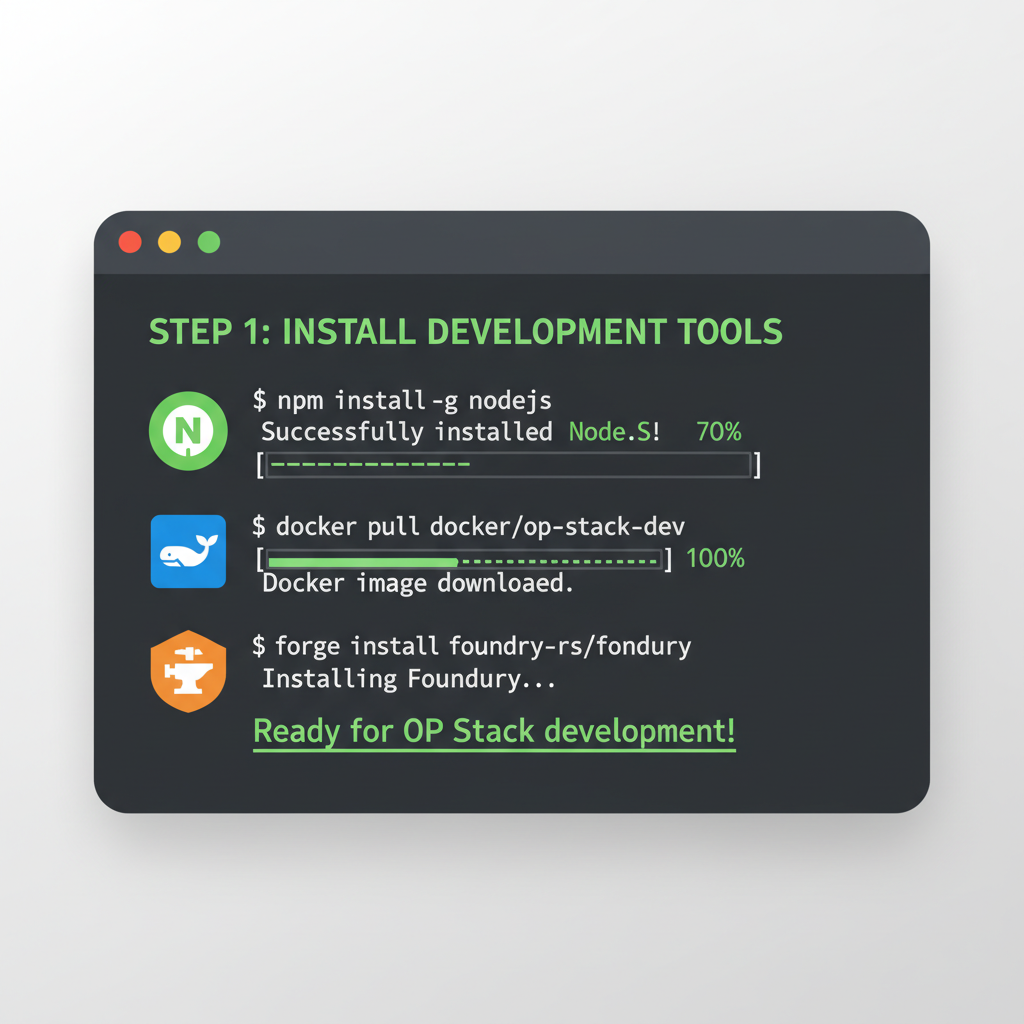
developer terminal installing Node.js Docker Foundry for OP Stack blockchain dev
Prepare Your Development Environment
Strategically equip your setup with essential tools: Node.js v20+, Docker for containerized chains, and Foundry for contract management. Execute `curl -L https://foundry.paradigm.xyz | bash` followed by `foundryup`. This foundation ensures seamless local simulation of Ethereum layers, minimizing deployment friction.
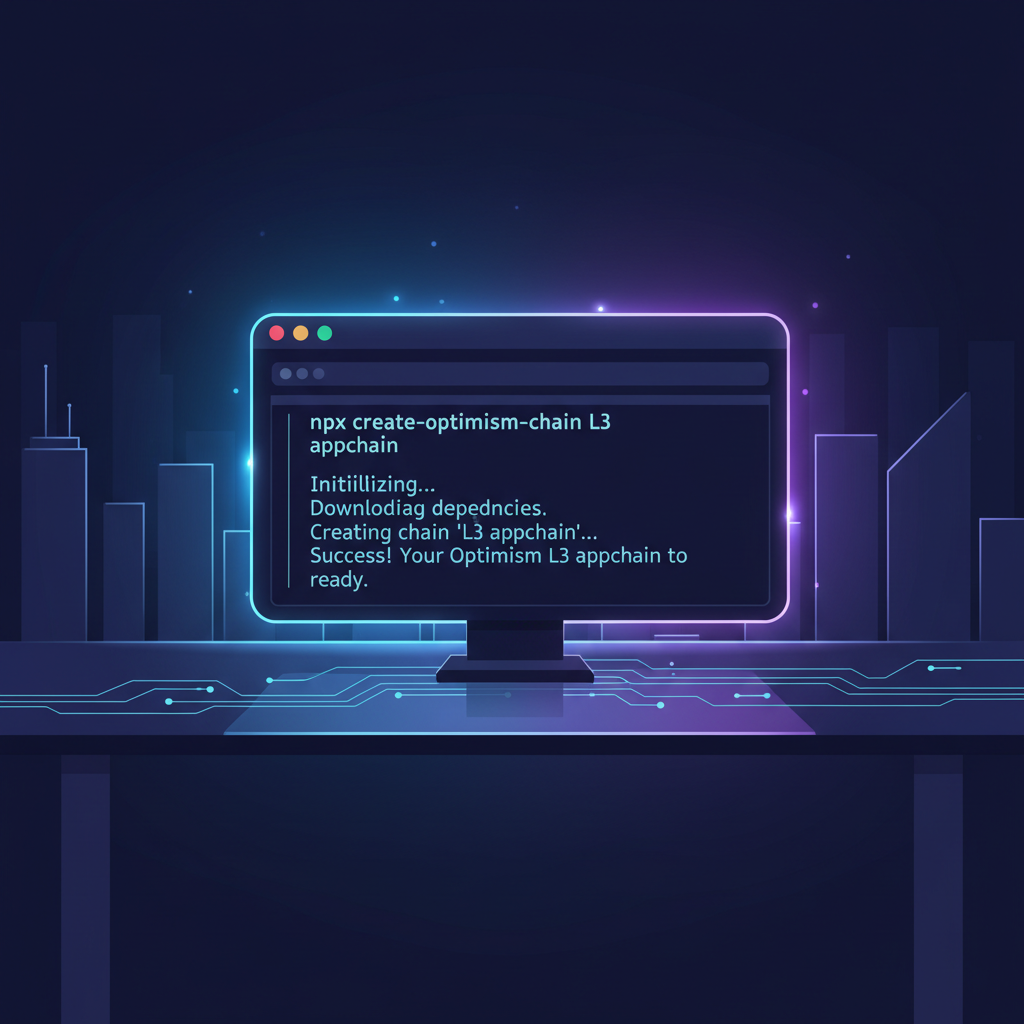
terminal executing npx create-optimism-chain L3 appchain futuristic glow
Scaffold Your L3 Chain with Optimism CLI
Harness the power of the official CLI to generate a sovereign L3 boilerplate. Run `npx create-optimism-chain@latest l3-appchain` and select L3 mode with local devnet parent chain. This thoughtful choice creates a modular appchain inheriting L2 security while optimizing for app-specific execution and sovereignty.
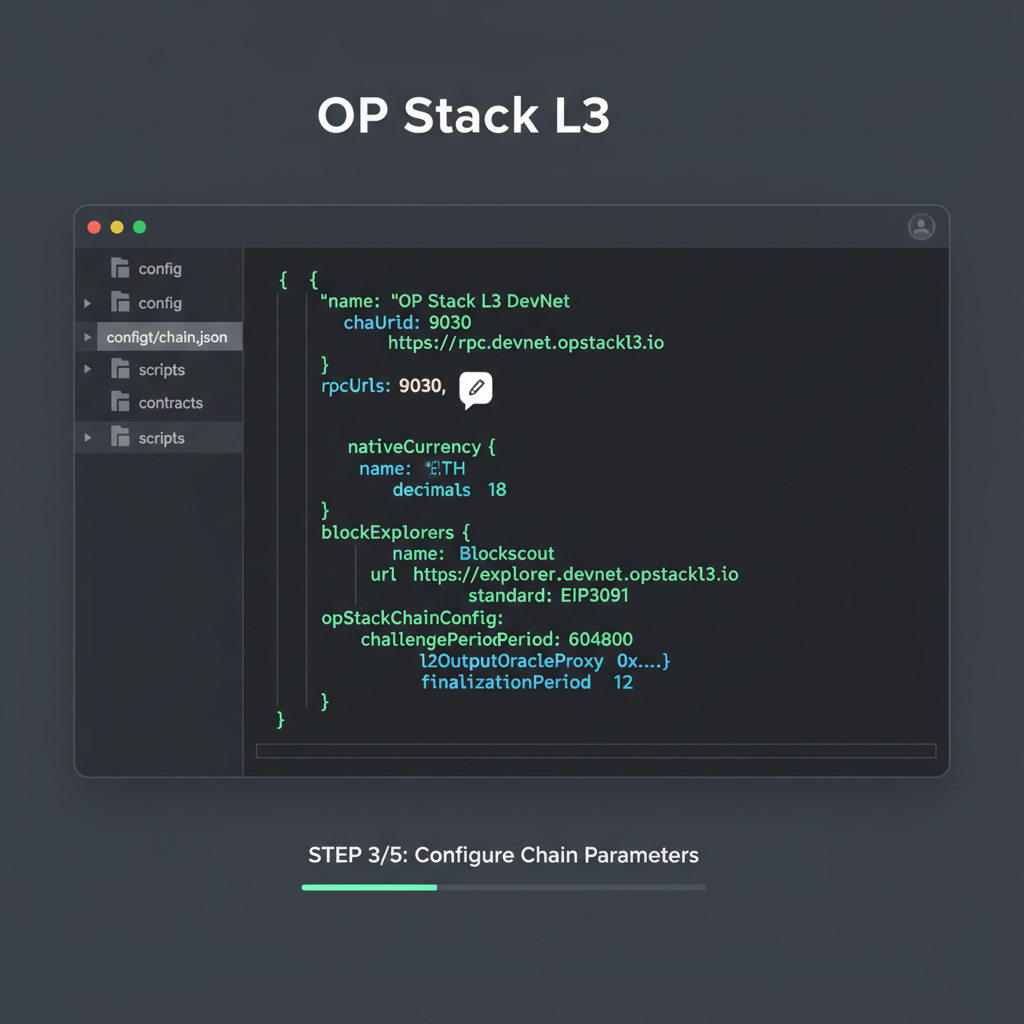
dark mode code editor configuring OP Stack L3 chain.json parameters
Configure Chain Parameters Thoughtfully
Navigate to `packages/contracts-bedrock/deploy-config/chain.json` in your new project. Strategically adjust L3 chain ID, gas limits, and parent L2 RPC endpoints to balance scalability and cost. Prioritize sovereignty by fine-tuning batch submission and dispute resolution for your appchain’s unique needs.
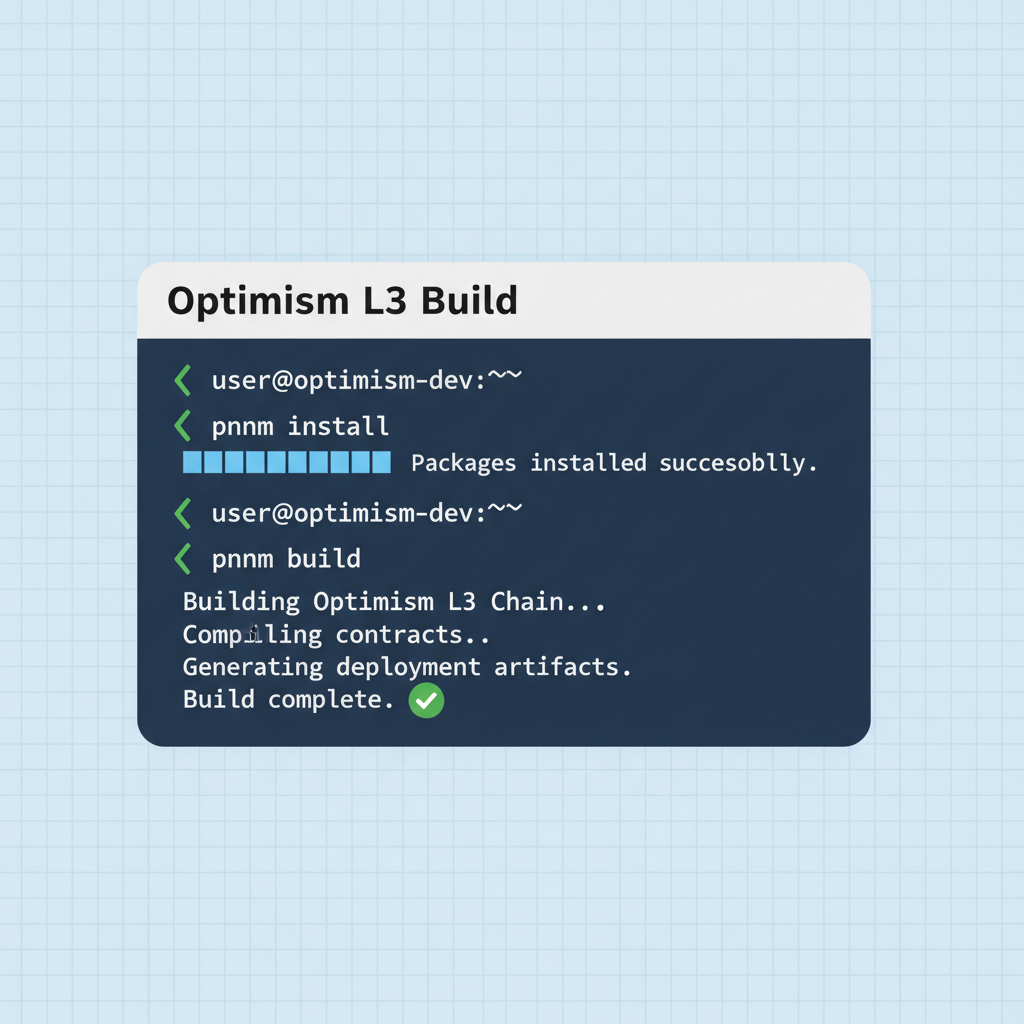
pnpm install build terminal Optimism L3 chain project clean UI
Install Dependencies and Build
Enter your project directory: `cd l3-appchain`, then `pnpm install` and `pnpm build`. This compiles smart contracts and node binaries efficiently, aligning all OP Stack modules for a production-grade dev environment in minutes.
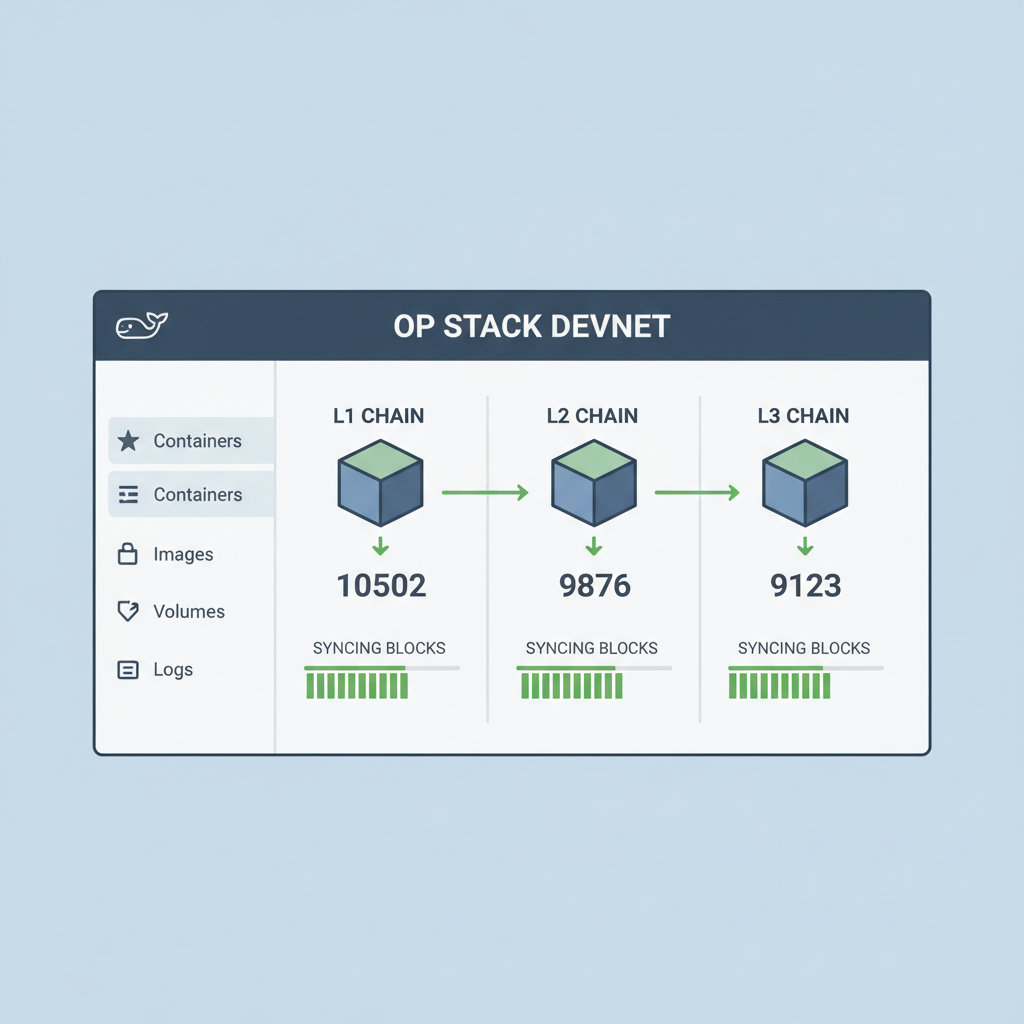
Docker dashboard running OP Stack L1 L2 L3 devnet chains blocks syncing
Launch the Full L1-L2-L3 Devnet Stack
Execute `pnpm docker:up` to spin up interconnected L1, L2 parent, and your L3 appchain via Docker Compose. Monitor logs for sync; fund bridges strategically to test cross-layer interactions, validating sovereign rollup settlement.
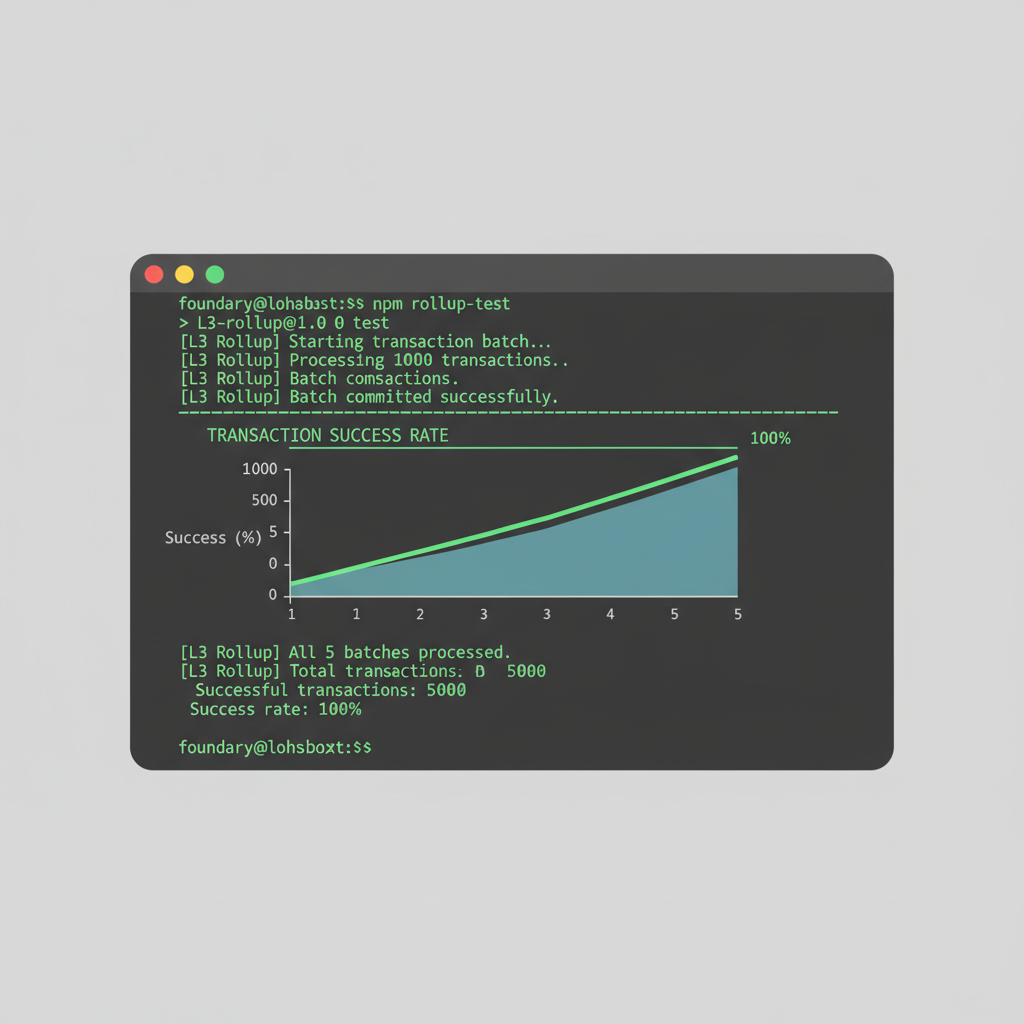
testing L3 rollup transactions Foundry terminal success graph
Verify and Test Your Sovereign L3
Deploy a sample contract via Foundry (`forge create`), bridge ETH from L1/L2, and query RPC endpoints. Confirm batch submissions to L2 parent and dispute mechanisms. This strategic validation ensures your appchain is battle-ready for custom applications.

Sovereign rollups redefine appchain sovereignty by decoupling execution from consensus and data availability, often leaning on modular DA layers like Celestia. Unlike smart contract rollups tethered to L1 or L2 settlement, sovereign rollups grant developers full control over governance, sequencing, and proving mechanisms. In the L3 context, this means stacking rollups atop L2s for hyper-customized environments – think game economies with real-time Ethereum state reads via tools like Spire Labs’ Based Stack.

Strategic Advantages of OP Stack for Sovereign L3 Rollups

The OP Stack stands out as the gold standard for OP Stack L3 deployments due to its modular design: bedrocks like op-node, op-batcher, and op-proposer snap together effortlessly. Optimism’s framework not only slashes transaction costs but also enables seamless upgrades without chain halts. From a macro perspective, as someone who’s tracked appchain cycles for nearly two decades, I see OP Stack L3s as undervalued bets – they capture Ethereum liquidity while sidestepping L2 congestion. Platforms like Zeeve amplify this with RaaS, handling node ops so you deploy devnets via dashboard clicks.
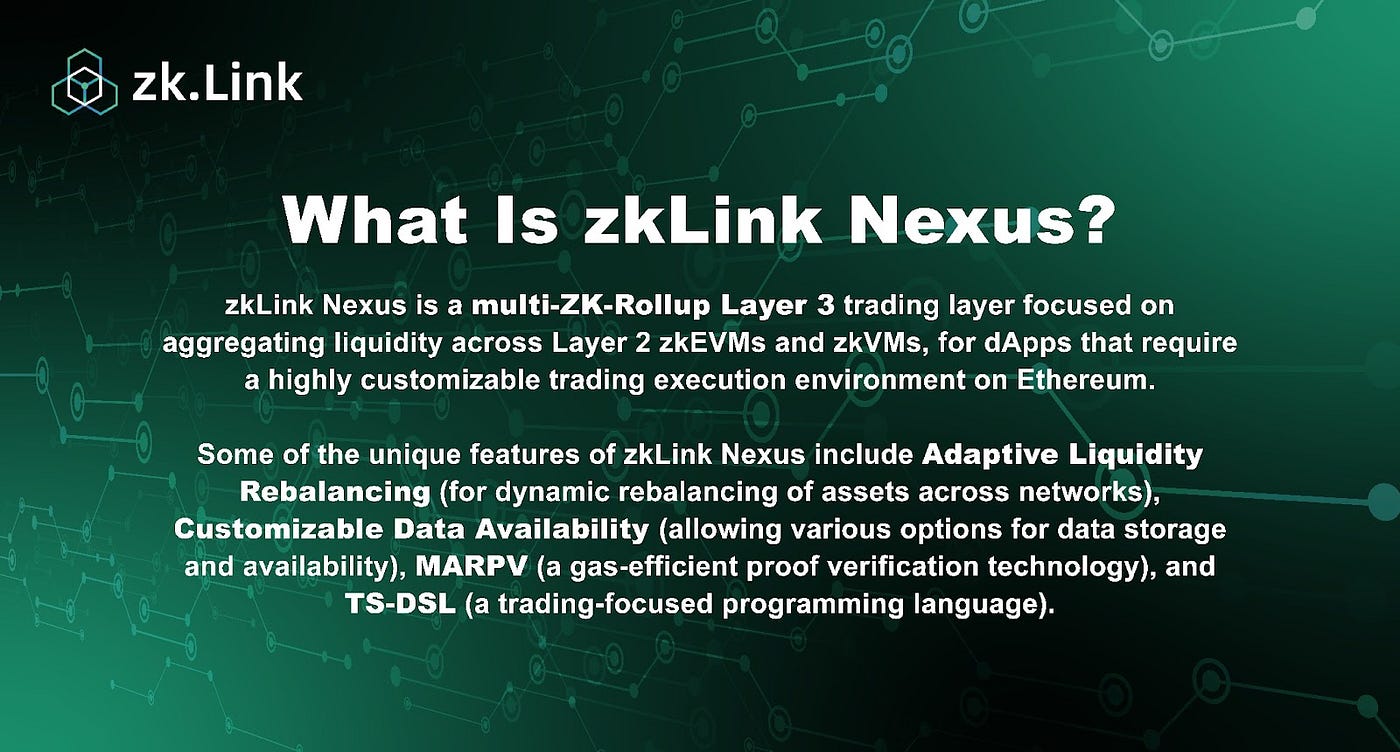
Diagram illustrating OP Stack architecture for sovereign L3 appchain deployment on Ethereum rollups

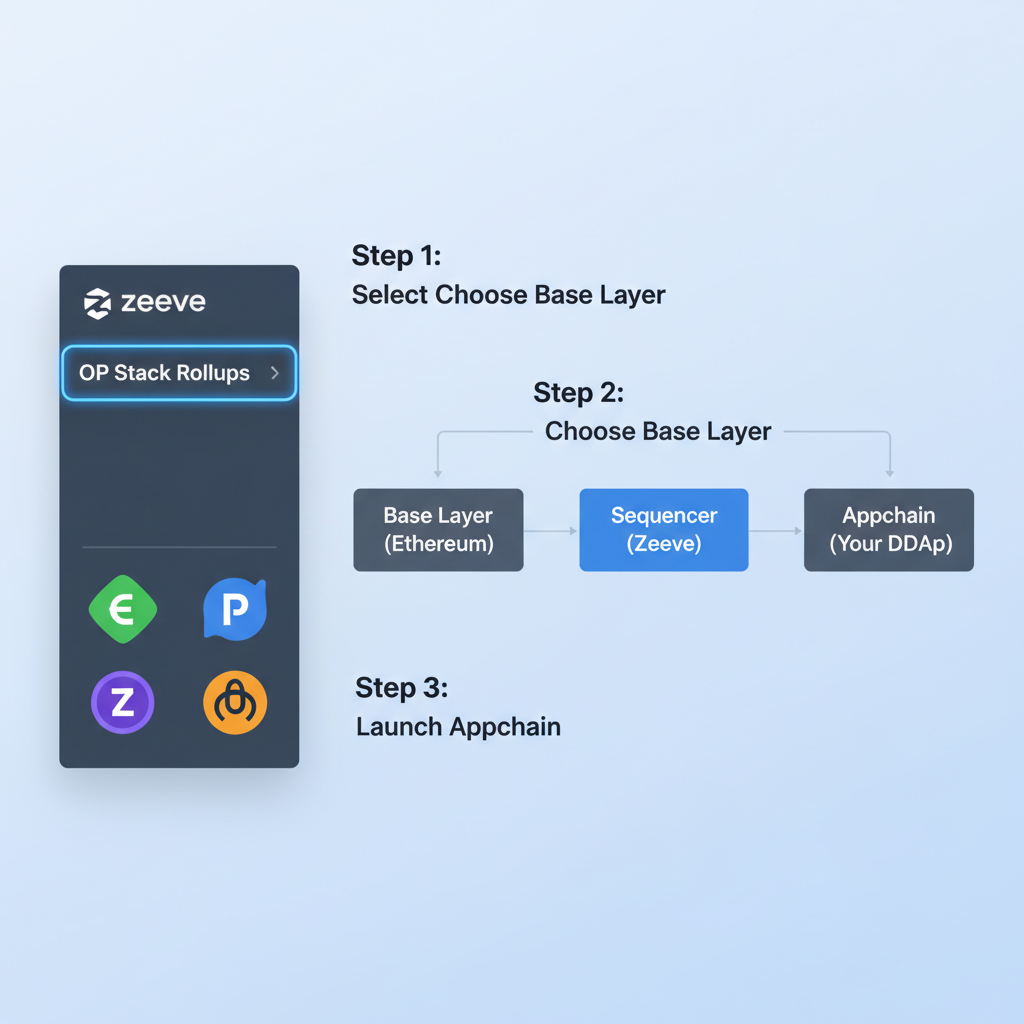
Consider the workflow: authenticate on Zeeve, select OP Stack under Appchains and amp; Rollups, configure genesis parameters, and launch. Testing connectivity and fault proofs follows swiftly, bridging the gap from prototype to production. This efficiency mirrors the 30-minute rollup launches demoed in Optimism workshops, proving boilerplates aren’t hype – they’re operational reality.

Deploy Sovereign OP Stack L3 Appchain in 30 Minutes: Fork, Tweak & Launch
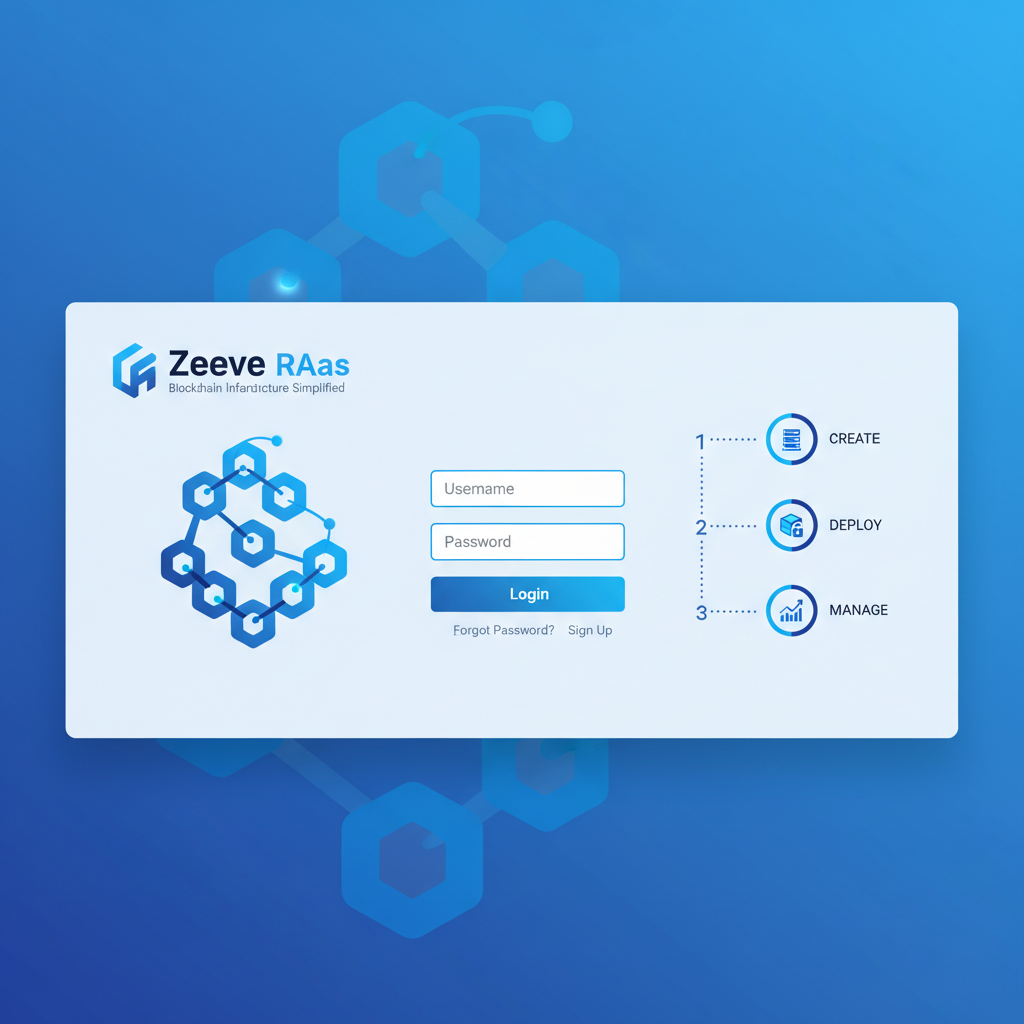
sleek blockchain dashboard login screen on Zeeve RaaS platform, modern UI, blue tones, professional tech vibe
Access Zeeve RaaS Platform
Strategically begin by signing up or logging into Zeeve’s Rollups-as-a-Service dashboard. This enterprise-grade platform streamlines OP Stack deployments with dedicated nodes, ensuring high uptime and seamless scalability for your sovereign L3 appchain.
Zeeve dashboard navigation menu highlighting OP Stack rollups section, clean interface, appchain icons
Navigate to OP Stack Appchains
From the dashboard, thoughtfully select ‘Appchains & Rollups’ > ‘OP Stack’. This positions you at the gateway for sovereign rollups, leveraging Zeeve’s pre-configured templates to inherit Ethereum security while customizing for L3 efficiency.
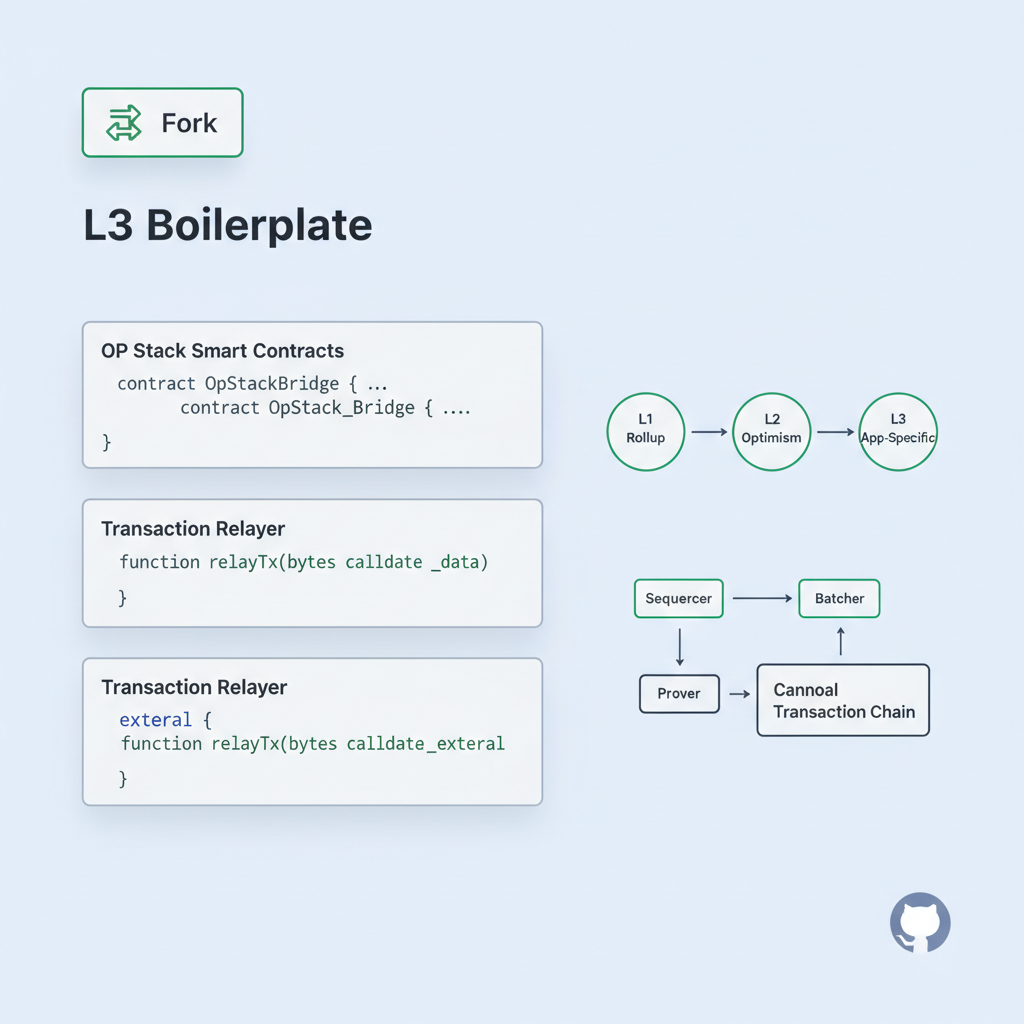
GitHub fork button on L3 Boilerplate repo, code snippets for OP Stack, blockchain diagrams
Fork L3 Boilerplate Template
Fork the L3Boilerplate template optimized for sovereign OP Stack L3 chains. This audited starter kit includes modular components for execution, settlement, and DevRel tools, accelerating your path to production without reinventing the wheel.
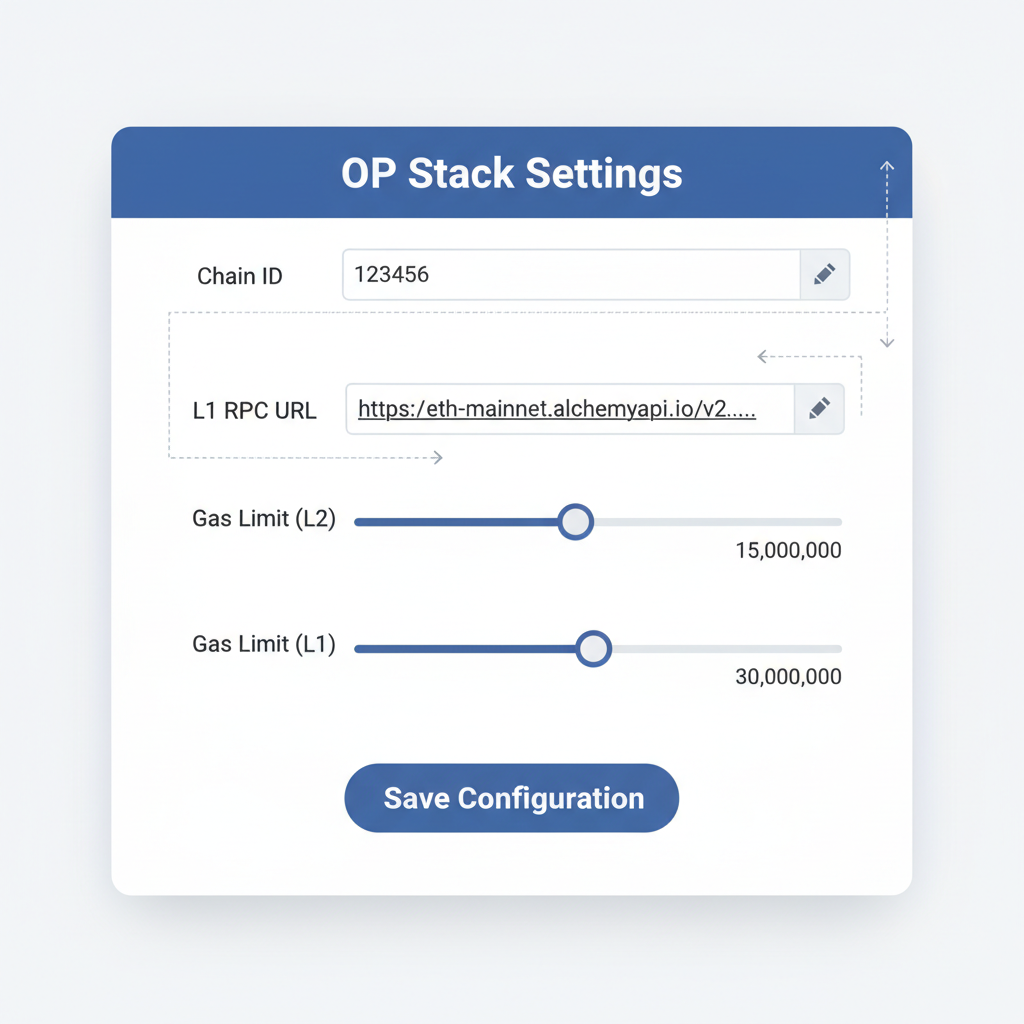
configuration form editing chain ID, L1 RPC URL, gas limit sliders, OP Stack settings panel
Tweak Chain ID, L1 RPC & Gas Limits
Strategically customize key parameters: set a unique chain ID (e.g., 901 for devnet), input your L1 Ethereum RPC endpoint, and adjust gas limits for optimal throughput. These tweaks ensure sovereignty, cost-efficiency, and compatibility with Ethereum’s state.
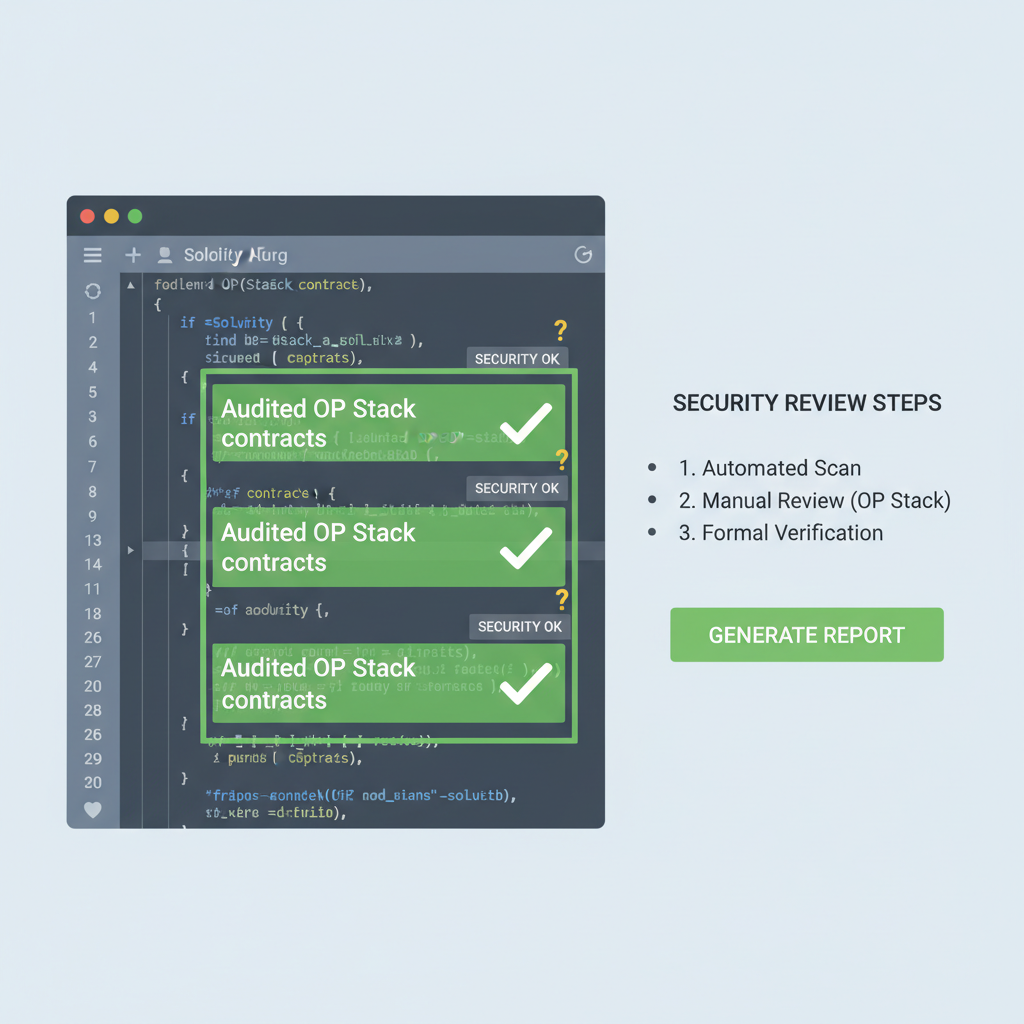
smart contract code review interface, audited OP Stack contracts highlighted, security checkmarks
Review Pre-Audited Contracts
Examine the boilerplate’s pre-audited smart contracts for OP Stack rollups. Verify settlement and dispute resolution logic aligns with your appchain’s strategic needs, minimizing risks in this modular sovereign setup.
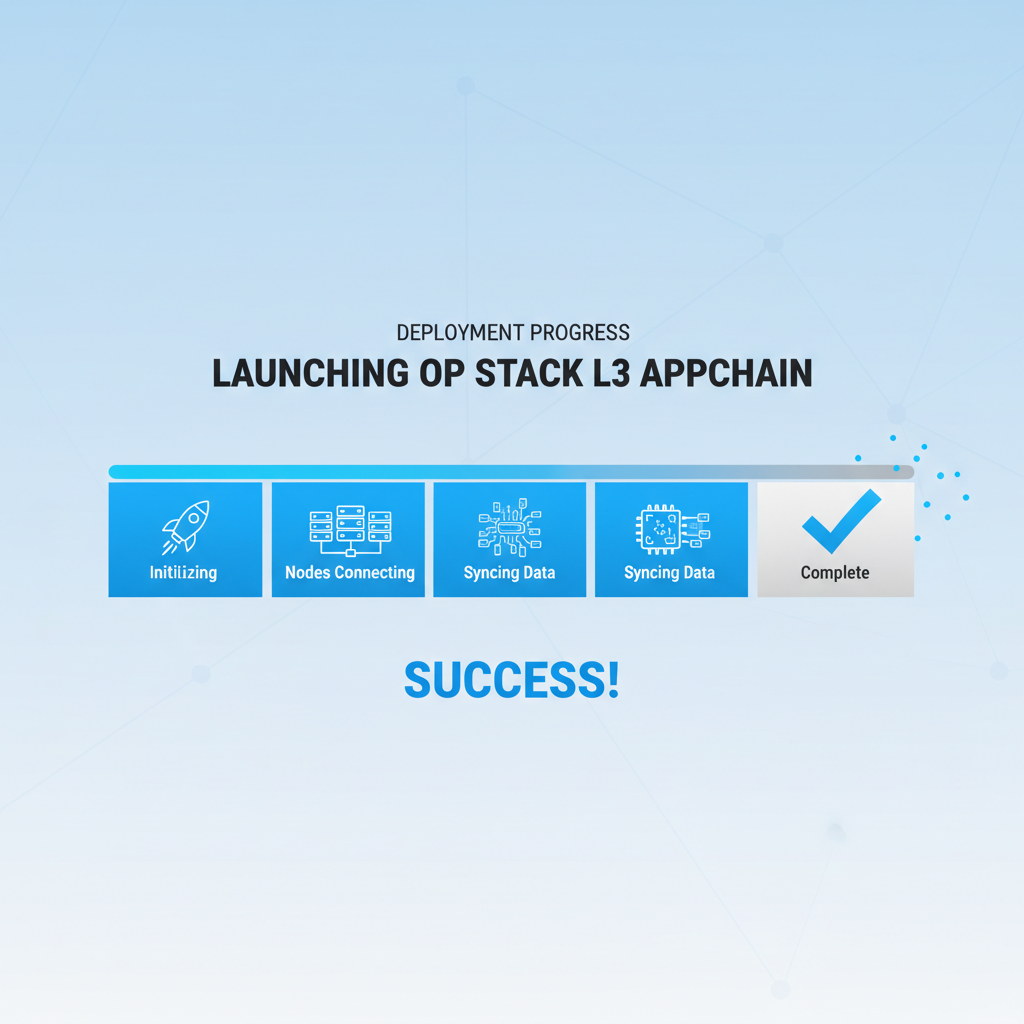
deployment progress bar launching OP Stack L3 appchain, nodes connecting, success animation
Launch via RaaS Deployment
Initiate deployment through Zeeve’s one-click RaaS. Monitor the 30-minute process as nodes provision, syncing your sovereign L3 with L1 for real-time Ethereum state access, powered by proven infrastructure.
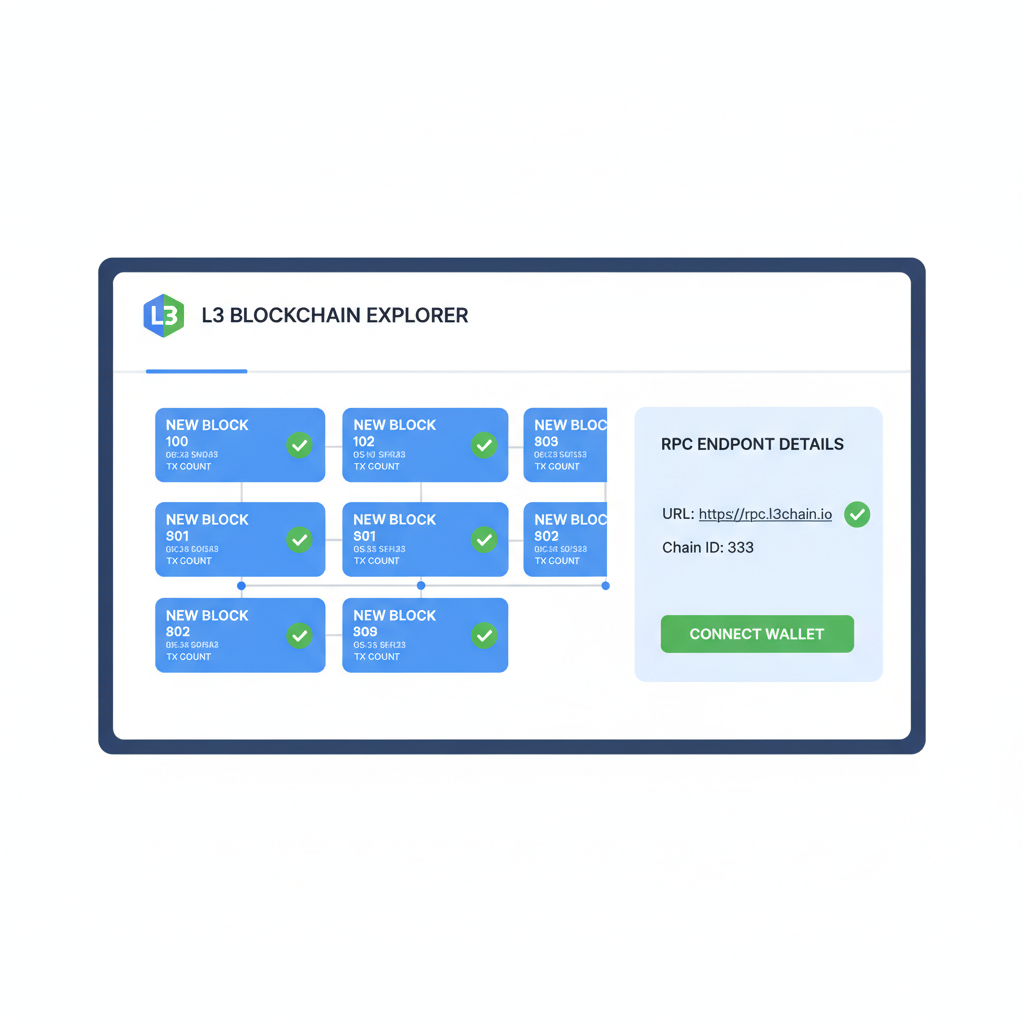
blockchain explorer showing new L3 chain blocks, RPC endpoint details, green verification badges
Verify Network & Access RPC
Post-deployment, strategically test connectivity via provided RPC endpoints. Confirm block production, explorer access, and DevRel kits integration, readying your appchain for dApp onboarding.
developer toolkit icons, SDK downloads, appchain announcement banner, community integration
Integrate DevRel Kits & Go Live
Leverage included DevRel kits for documentation, SDKs, and monitoring. Announce your sovereign OP Stack L3, strategically positioning it for builders in the modular stack ecosystem.

Strategically, these L3 deployment guides embedded in our boilerplates guide you through nuances like custom sequencers or Based Stack integrations for live Ethereum data. Builders avoid common pitfalls – misconfigured dispute games or DA mismatches – accelerating time-to-market. In my view, zooming out reveals L3 appchains as the next wealth builder: low entry barriers now mean dominant positions later, much like early L2s.

Preparing Your Environment for OP Stack L3 Launch

Before diving into scripts, align prerequisites thoughtfully. You’ll need Node. js 18 and, Foundry for contract verification, and Docker for local chains. Clone the OP Stack repo, set environment vars for L1 RPC and private keys, then ignite the chain via make commands. Our boilerplate wraps this in a single npm script, outputting RPC endpoints ready for MetaMask. This setup not only validates sovereign control but preps for production bridges and indexers.

Our L3 appchain boilerplate streamlines this further by bundling audited contracts, genesis configs, and DevRel-ready docs into a forkable repo. No more piecing together scattered guides from Optimism docs or GitHub threads; everything aligns for sovereign L3 sovereignty from the first block.

Deploying Your Sovereign OP Stack L3 in Under 30 Minutes

Deploy OP Stack L3 Sovereign Rollup in 30 Minutes: Strategic Boilerplate Guide
github fork button clicked on L3 boilerplate repo page, clean UI screenshot
Fork the L3Boilerplate Repo
Strategically begin by forking the L3Boilerplate repository from GitHub to your account. This creates your customizable base for the OP Stack L3 appchain. Clone it locally using `git clone ` and navigate into the directory with `cd L3Boilerplate`.
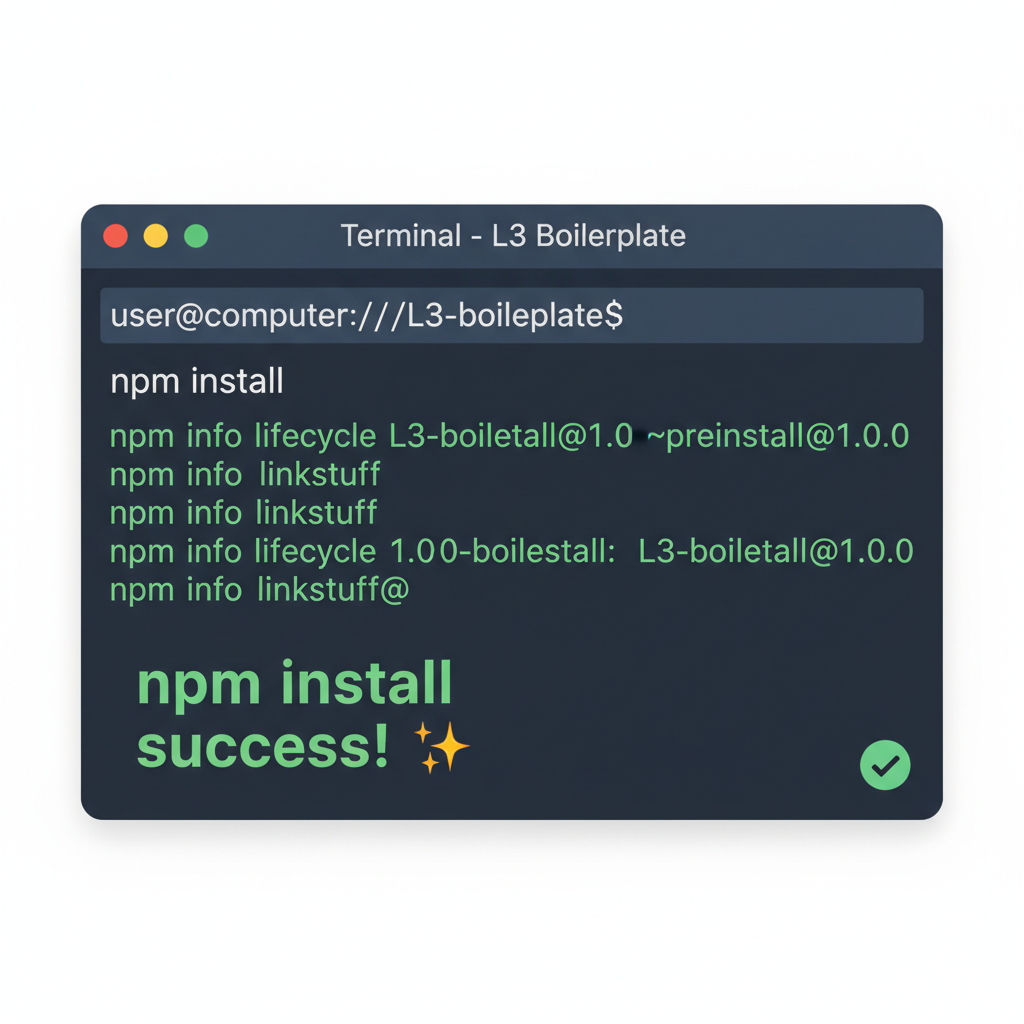
terminal window running npm install in L3 boilerplate directory, green success logs
Install Dependencies
Prepare your environment thoughtfully: Ensure Node.js (v18+) is installed. Run `npm install` to fetch all necessary packages for deployment, sequencing, and OP Stack components.
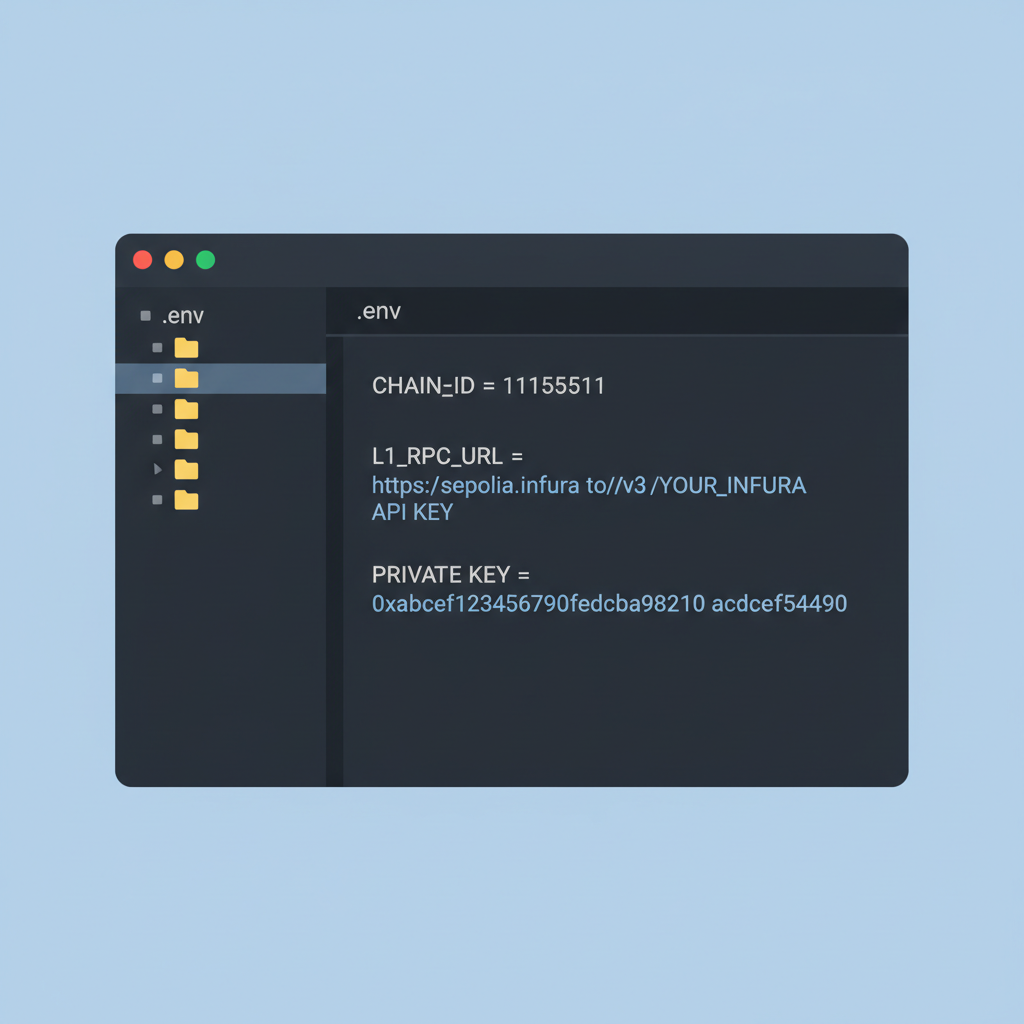
code editor open with .env file showing chain ID, L1 RPC, private key fields filled
Configure .env File
Edit the `.env` file strategically: Set unique `CHAIN_ID` (e.g., 901 for local), `L1_RPC_URL` to your Ethereum L1 node (e.g., local Anvil or Sepolia), and securely add `PRIVATE_KEY` for deployer. Use environment variables to avoid hardcoding sensitive data.
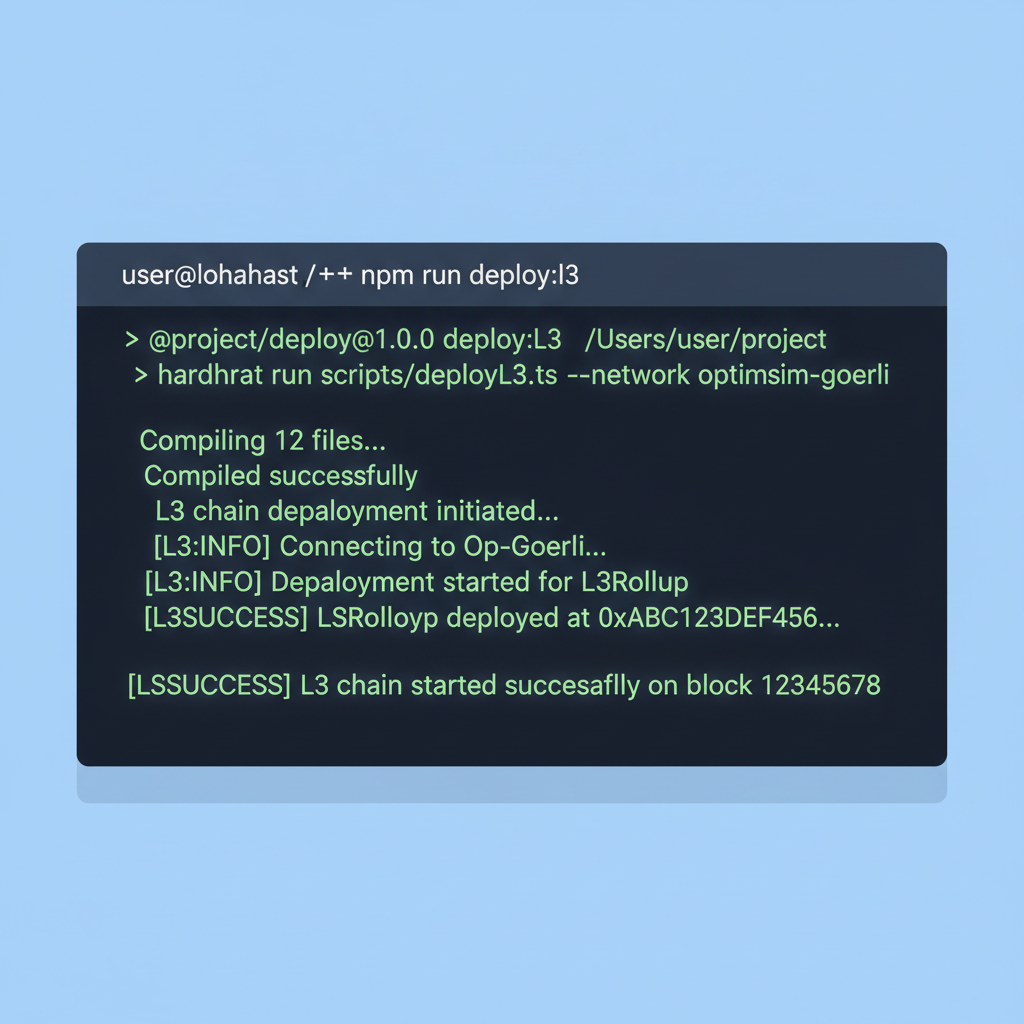
terminal executing npm run deploy:l3, logs showing L3 chain starting successfully
Deploy the L3 Chain
Execute the deployment script with `npm run deploy:l3`. Monitor the output for L3 RPC URL, explorer URL, and chain details. This bootstraps your sovereign L3 rollup, inheriting OP Stack security while enabling app-specific customization.
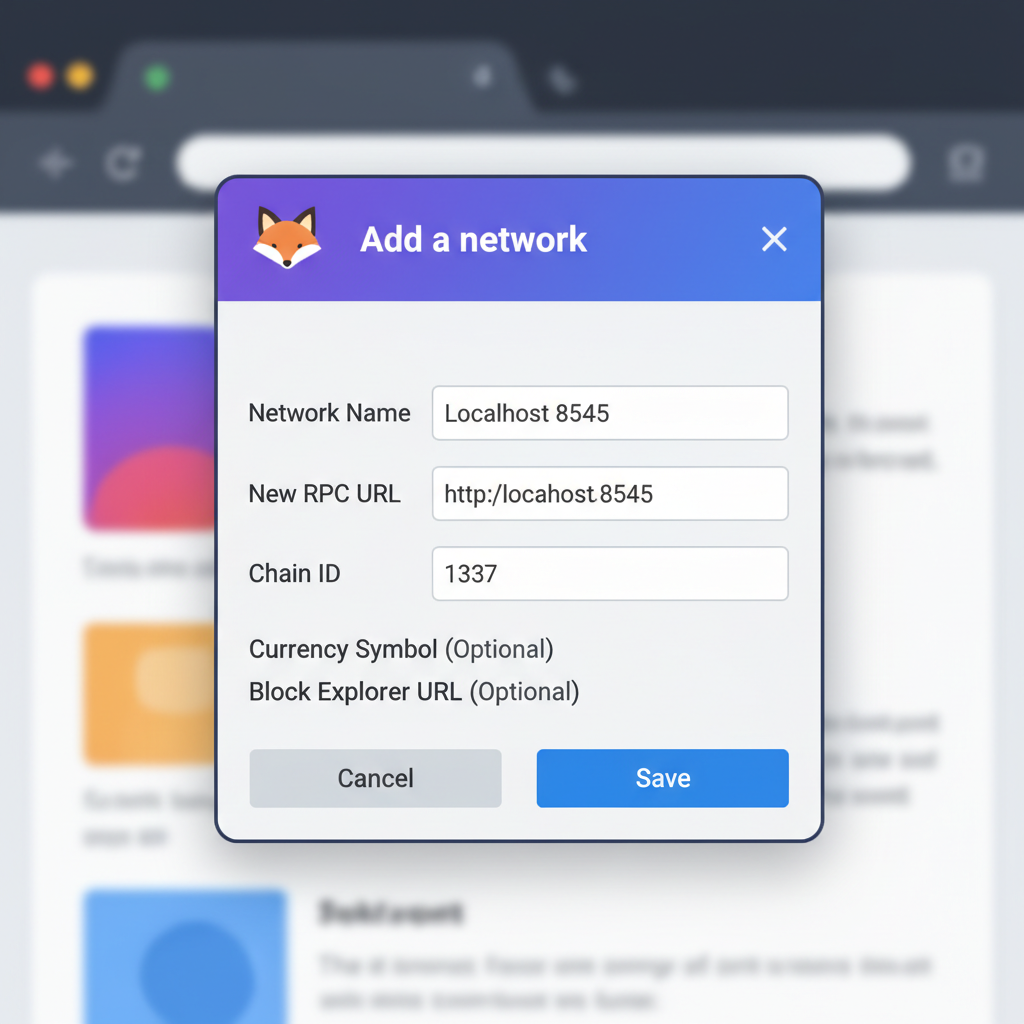
metamask popup adding custom RPC network with localhost URL and chain ID fields
Connect MetaMask to Local L3 RPC
In MetaMask, add a new network: RPC URL from deployment logs (e.g., http://localhost:8545), Chain ID matching your config, and a block explorer URL if provided. Switch to this network for interactions.
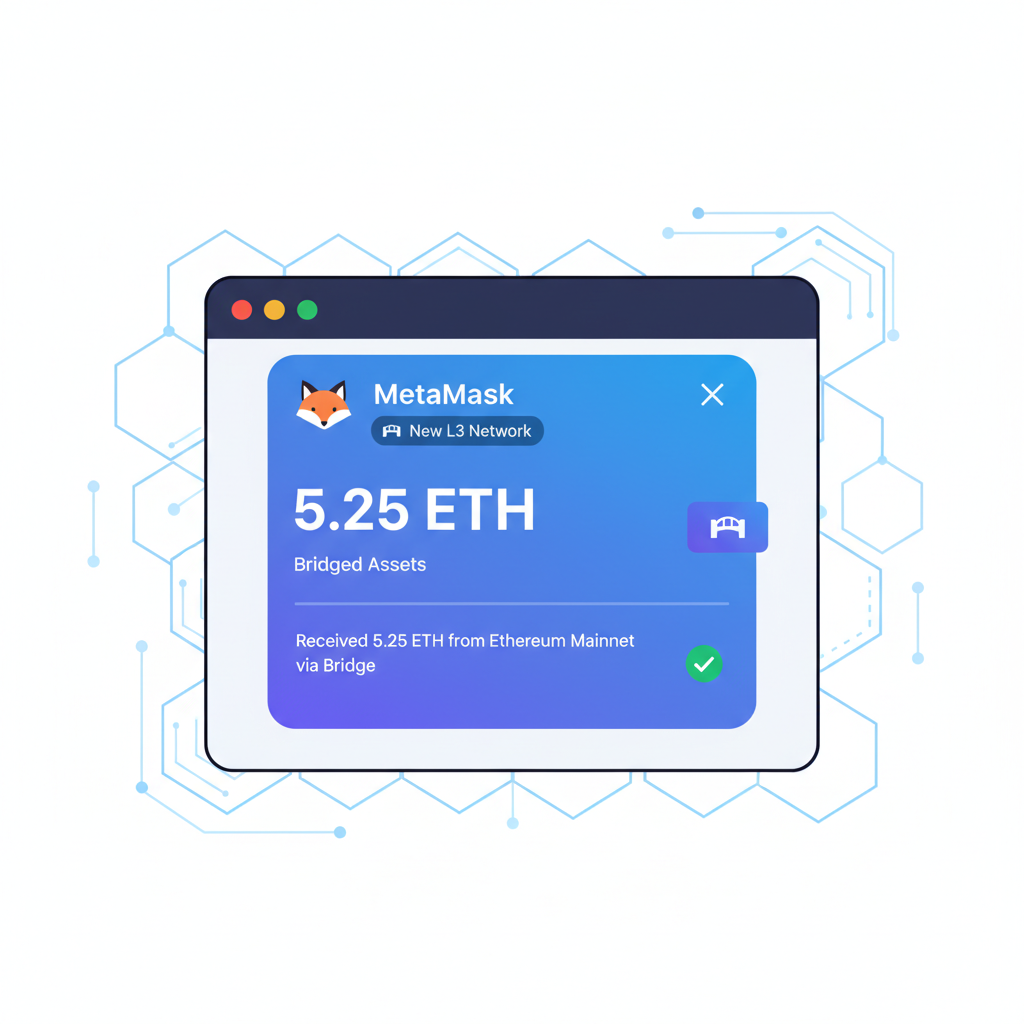
metamask wallet showing ETH balance on new L3 network after bridging
Fund Your Deployer Account
Transfer test ETH from L1 to L3 via the bridge script if needed (`npm run bridge-eth`), or use the provided faucet script. Ensure sufficient funds for contract deployments on your L3.
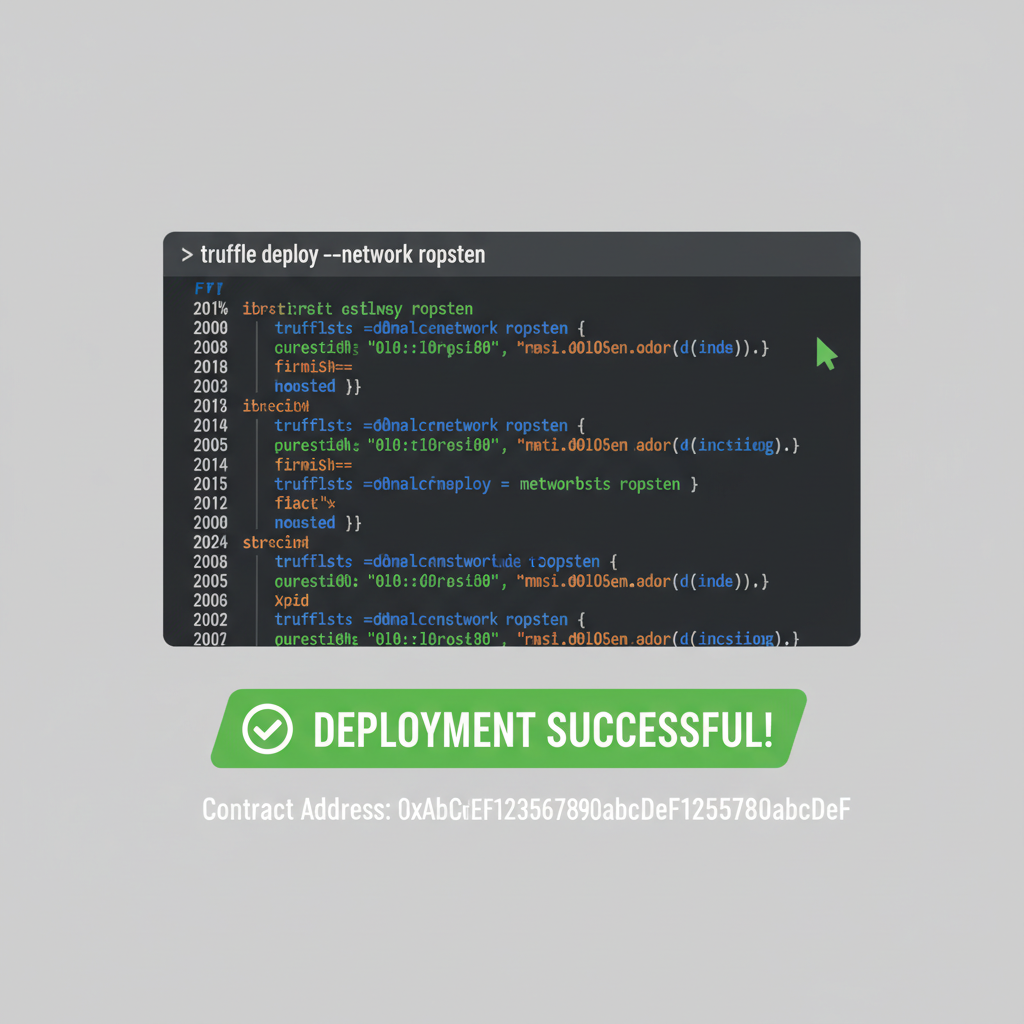
terminal running contract deployment script, success message with contract address
Deploy Sample App Contract
Use the repo’s Hardhat or Foundry scripts (e.g., `npm run deploy:app`) to deploy a sample ERC20 or NFT contract. Note the contract address from logs for verification.
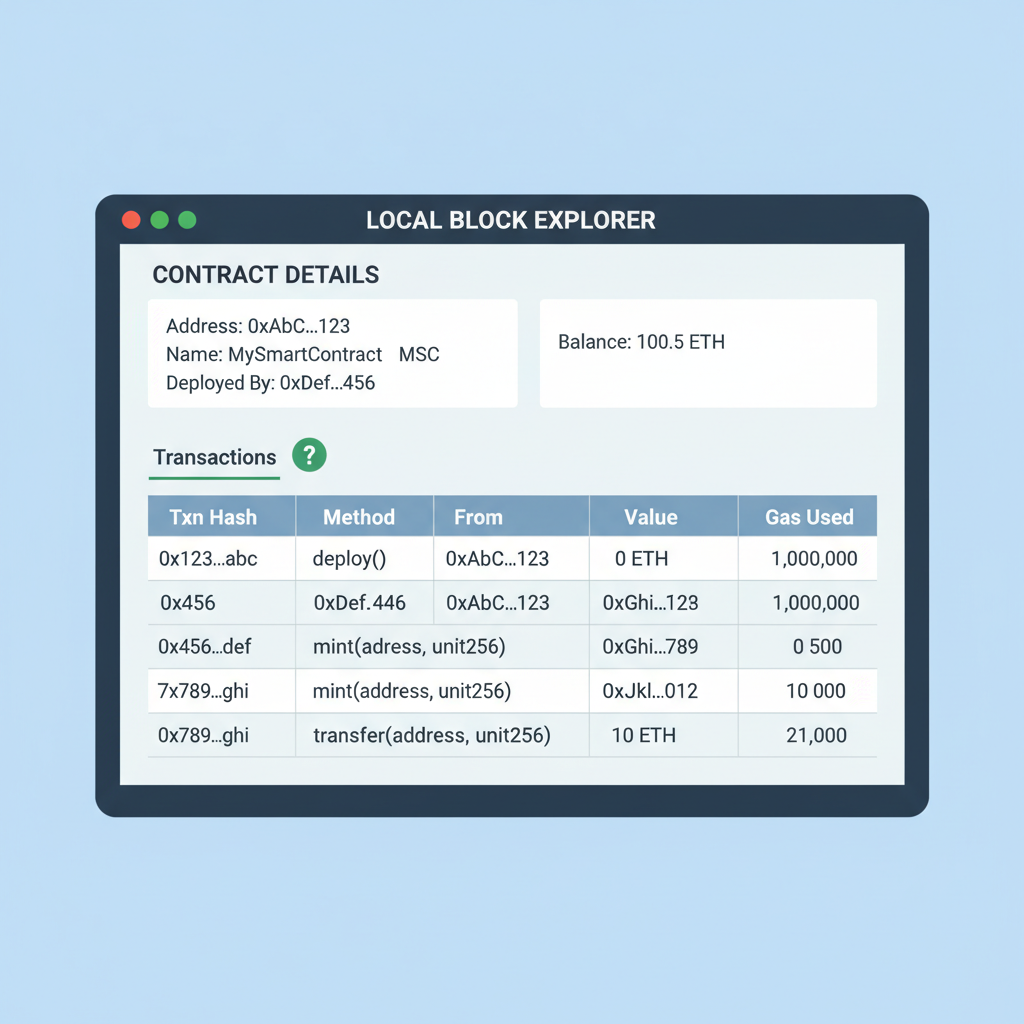
local block explorer UI displaying deployed contract details and transactions
Verify on Local Explorer
Access the local block explorer URL from deployment logs. Search for your contract address, confirm deployment, and inspect transactions. This validates your sovereign L3 appchain’s functionality.

This process leverages the OP Stack’s op-chain-ops suite, customized for L3 stacking atop any L2 parent chain. Sovereign control shines here: define your own dispute resolution via fault proofs, integrate alternative DA like Celestia for cheaper availability, or plug in custom sequencers. Builders drawn from Zeeve’s step-by-step DevNet tutorials will appreciate how our templates mirror those flows but accelerate with pre-tuned params, cutting setup from hours to minutes.

At its core, the deployment hinges on a single command that orchestrates l1, l2, and l3 chains locally. This mirrors production paths on RaaS platforms, where dashboard selections replace CLI toil. For appchain templates emphasizing sovereignty, we embed options for Based Stack composability, pulling live Ethereum state without oracles – ideal for DeFi L3s or NFT marketplaces needing real-time L1 data.

NPM Script for L3 Appchain Deployment

To deploy your OP Stack L3 chain efficiently, incorporate this NPM script into your `package.json`. It orchestrates Docker Compose for service startup followed by contract deployment via Forge, leveraging environment variables for seamless configuration.

```bash
"deploy:l3": "docker-compose up -d && forge create --rpc-url $L3_RPC --private-key $DEPLOYER_KEY YourAppchainContract.sol:YourAppchainContract"
```

Strategically define `L3_RPC` and `DEPLOYER_KEY` in your `.env` file to point to your OP Stack L3 RPC endpoint and deployer private key. This setup minimizes manual steps, enabling rapid prototyping and production deployments.

Once spun up, your chain hums with a dedicated RPC, block explorer stub, and bridge contracts. Test by minting tokens or executing app logic; sovereign rollups excel in isolating high-throughput workloads, like gaming loops hitting thousands of TPS without Ethereum congestion.

Verification Checklist and Production Ramp-Up

Strategic Post-Deploy Fortress: Secure Your OP Stack L3 Rollup

  • 🔌 Confirm L3 RPC connectivity by querying the endpoint and validating response times for seamless chain interaction🔌
  • 🛡️ Verify fault proof activation through chain configuration review and test dispute resolution mechanisms🛡️
  • 🌉 Test L2-L3 bridge transfers with sample assets to ensure secure and efficient cross-layer movement🌉
  • 📋 Audit sequencer logs strategically for custom transaction ordering and performance optimizations📋
  • ☁️ Scan DA layer sync status, particularly if using Celestia integration, to confirm data availability integrity☁️
Excellent work! Your L3 appchain has passed all essential post-deploy checks, ensuring strategic resilience and sovereign scalability. Deploy with confidence. 🚀

Ticking these ensures your OP Stack L3 isn’t just running but resilient. From my vantage tracking macro cycles, I’ve seen too many chains falter on overlooked verifier configs or sequencer centralization risks. Our boilerplate mitigates these with hardened defaults and upgradeable proxies, positioning you for seamless mainnet migration via Zeeve or QuickNode infra.

Beyond tech, strategic deployment demands forethought on tokenomics and governance. Embed native tokens from genesis for app-specific incentives, or bootstrap liquidity pools bridging to L2s. As undervalued L3 projects mature, early deployers capture outsized value – think OP Stack chains evolving into full appchains rivaling Saga or Tanssi frameworks, but with Ethereum-aligned security.

Scaling to production involves RaaS for node fleets: Zeeve’s OP Stack flows handle validator sets and archive nodes, while our DevRel kits supply marketing collateral, SEO-optimized docs, and community onboarding templates. This holistic approach turns a 30-minute devnet into a launch-ready sovereign rollup, primed for user acquisition.

Zooming out across appchain ecosystems, OP Stack L3s represent a calculated entry into modular blockchain’s frontier. Low deployment friction today compounds into network effects tomorrow, rewarding patient builders who prioritize sovereignty over hype. With boilerplates like ours, the barrier dissolves; what’s left is crafting the next dominant L3 appchain.

Leave a Reply

Your email address will not be published. Required fields are marked *