
In the ever-evolving blockchain landscape, where Ethereum hovers at $1,942.22 amid a 24-hour dip of -3.42%, developers face mounting pressure to scale applications without compromising sovereignty or performance. Sovereign rollups and L3 appchains emerge as pivotal solutions, offering customizable templates to launch app-specific chains swiftly. These boilerplates strip away deployment complexities, empowering builders to focus on innovation rather than infrastructure drudgery.
Deploy L3 Rollup with Conduit & thirdweb: Launch App-Specific Chains Fast
The Shift Toward Sovereign Rollups in Appchain Design
Sovereign rollups represent a maturation of appchain architecture, decoupling execution from rigid data availability layers while retaining full control over governance and economics. Unlike traditional L2s tethered to Ethereum's sequencer, these L3 frameworks like Rollkit enable developers to mix-and-match components, Celestia for DA, custom VMs for execution, crafting chains optimized for high-value apps such as DeFi protocols or NFT marketplaces.
This evolution addresses key pain points in monolithic blockchains. Appchains dedicate blockspace to single applications, but sovereign rollups amplify this with verifiable performance and custom tokenomics. As Ethereum's price reflects market caution at $1,942.22, the demand for efficient scaling intensifies; L3 appchain boilerplates from providers like Zeeve and Arbitrum Orbit deliver production-ready stacks, slashing launch times from months to weeks.
Consider the practical edge: Cosmos SDK pioneered sovereign appchains, but modern L3 kits build on this with Ethereum compatibility. Frameworks abstract away node management, bridging, and security audits, letting teams deploy sovereign rollup templates that fork effortlessly for testing or iteration.
Leading L3 Appchain Boilerplates and Their Stacks
Diving into the ecosystem, several standout boilerplates dominate. Zeeve's Rollups-as-a-Service supports Arbitrum Orbit, zkSync ZK Stack, OP Stack, and Polygon CDK, providing end-to-end infrastructure for sovereign L1 appchains to L3 rollups. Their platform handles monitoring, upgrades, and multi-cloud deployments, ideal for enterprise-grade launches.
| Framework | Key Features | Best For |
|---|---|---|
| Zeeve RaaS | Multi-stack support (Orbit, ZK Stack, CDK) | Enterprise appchains |
| Rollkit | Custom DA/VM, modular sovereignty | High-customization rollups |
| Arbitrum Orbit and Stylus | Rust/C and and contracts, flexible DA | Performance-optimized L3s |
| ZK Stack (Matter Labs) | ZK rollups, non-EVM options | Hyperscalable apps |
| Polygon AggLayer CDK | ZK/Validium configs, unified liquidity | Interoperable chains |
Rollkit stands out for its pure sovereignty, allowing devs to bolt on any DA layer without compromises. Arbitrum Orbit pairs with Stylus for gas-efficient contracts in native languages, a game-changer for compute-heavy dApps. Meanwhile, ZK Stack pushes hyperscalability via L3s, and Polygon's CDK generalizes zkEVM tech for rapid spins.
These L3 appchain boilerplates aren't just code stubs; they're comprehensive DevRel kits with docs, marketing templates, and SEO frameworks. Spire's L3 protocol adds synchronous composability atop zkEVM L2s, ensuring seamless L2 interactions, a nuance often overlooked in rushed deployments.
Why Customizable Templates Outpace From-Scratch Builds
Building an app-specific chain from scratch demands expertise across cryptography, networking, and economics, rare even among seasoned teams. Boilerplates flip this script, offering app specific chain kits pre-audited for security and compliant with Ethereum's $1,942.22 ecosystem. Customization shines in governance modules, fee mechanisms, and sequencer choices, tailored without reinventing wheels.
Take Base Appchains: they integrate near-instant bridging with Base, scaling independently yet cohesively. Conduit's frameworks, paired with tools like thirdweb, democratize L3 rollups for Ethereum builders. The result? Faster time-to-market, reduced costs, and verifiable sovereignty that monolithic chains can't match.
Yet the real differentiator emerges in real-world velocity. With Ethereum stabilizing around $1,942.22 after a -3.42% dip, capital efficiency demands chains that launch without fanfare or failure. L3 appchain boilerplates deliver this through plug-and-play modules, where devs tweak sequencer logic or token vesting in hours, not sprints.
Hands-On: Deploying Your Sovereign Rollup Template
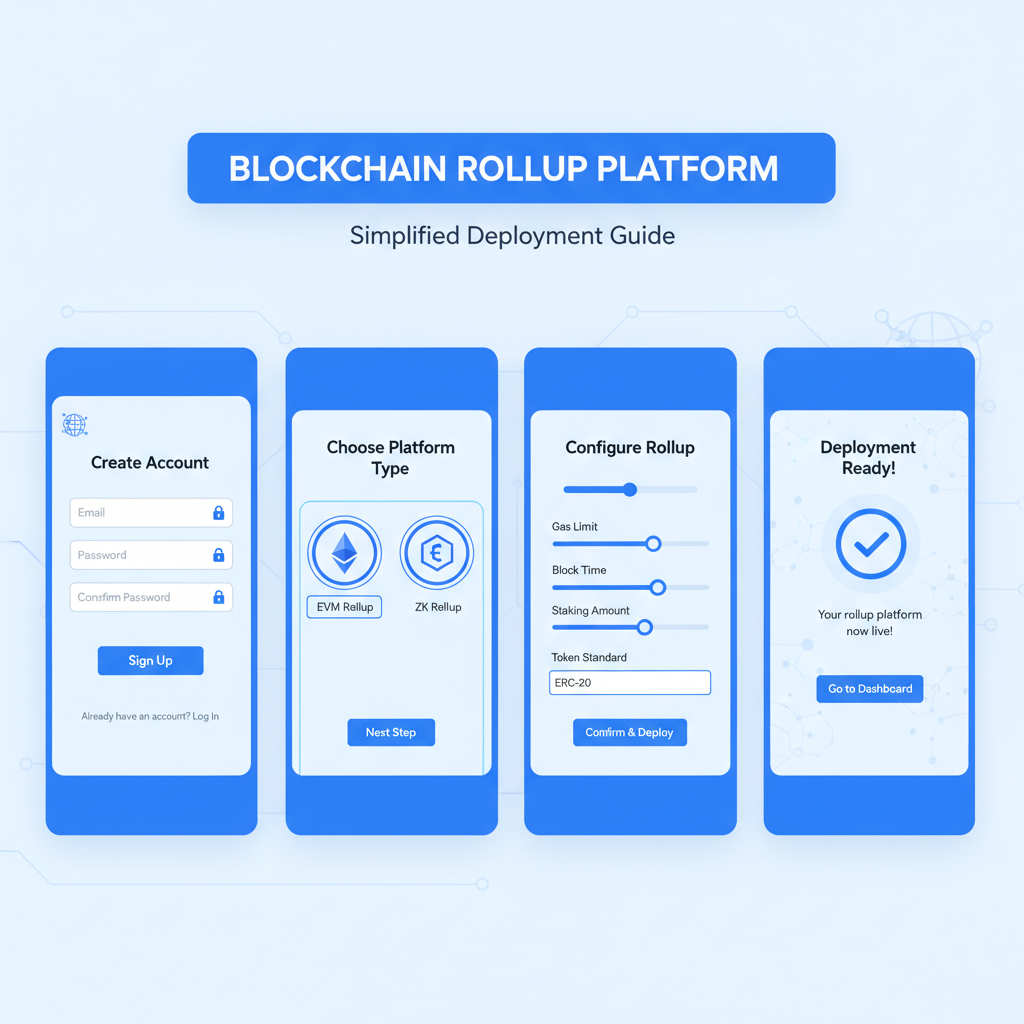
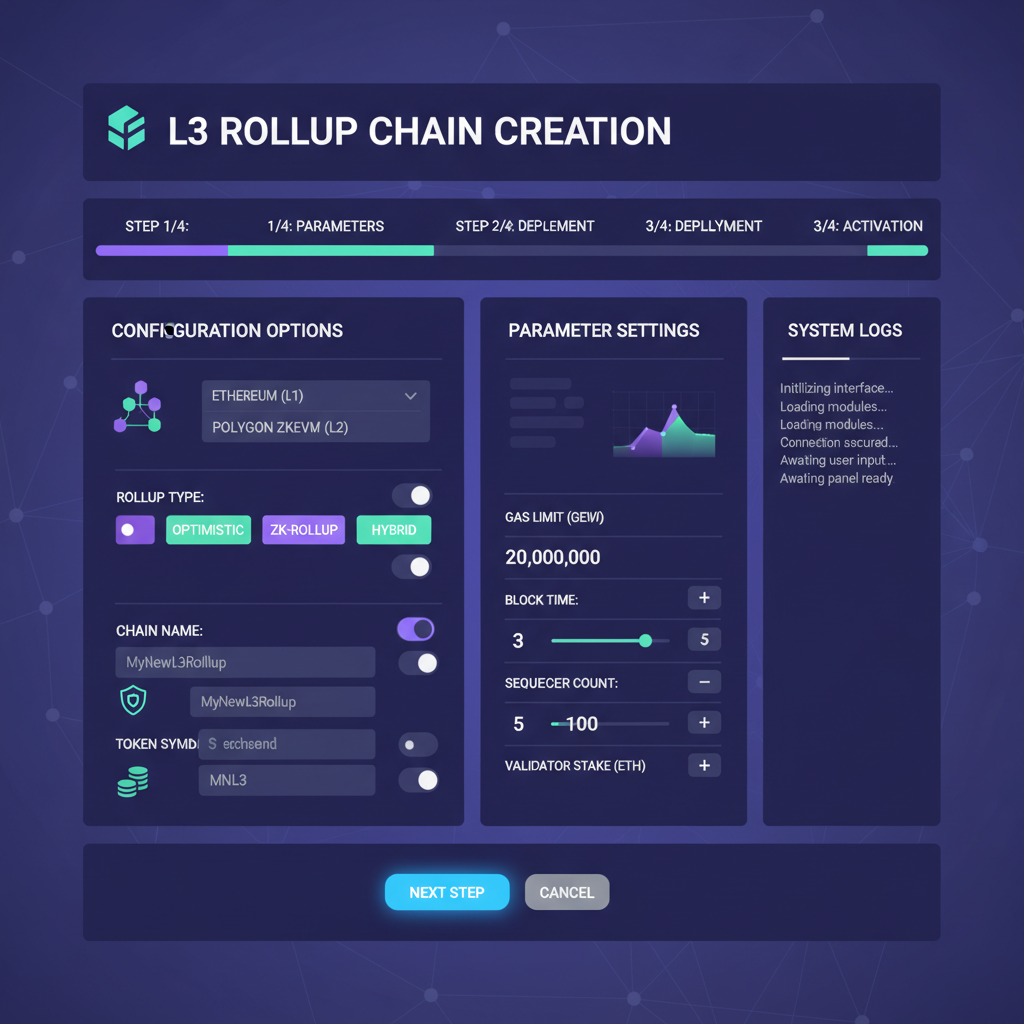
Picture spinning up a custom L3 for a DeFi vault: Rollkit's framework lets you scaffold in minutes. Start with a base config for Celestia DA, slot in a Reth execution client, and you're live. These sovereign rollup templates include battle-tested defaults, sidestepping the pitfalls of bespoke engineering like faulty consensus or siloed liquidity.
Simple Rollkit config.yaml
For a straightforward sovereign L3 appchain deployment, start with this minimal Rollkit configuration YAML. It integrates Celestia for data availability and specifies a custom VM, providing a solid foundation for fast launches.
```yaml
namespace: "l3appchain1"

# Data Availability layer configuration
da_layer:
  name: "celestia"
  config:
    rpc_endpoints:
      - "https://testnet-rpc.celestia.org"
    namespace_id: "your_custom_namespace_id"

# Consensus layer
consensus_layer:
  name: "rollkit"

# Custom VM configuration
vm:
  name: "custom"
  config_path: "./custom_vm_config.json"

rollapp_id: "rollapp_1234"
```
Adjust the namespace ID, RPC endpoints, and VM config path according to your setup. This template emphasizes modularity, allowing seamless swaps for different DAs or VMs while maintaining Rollkit's lightweight consensus.
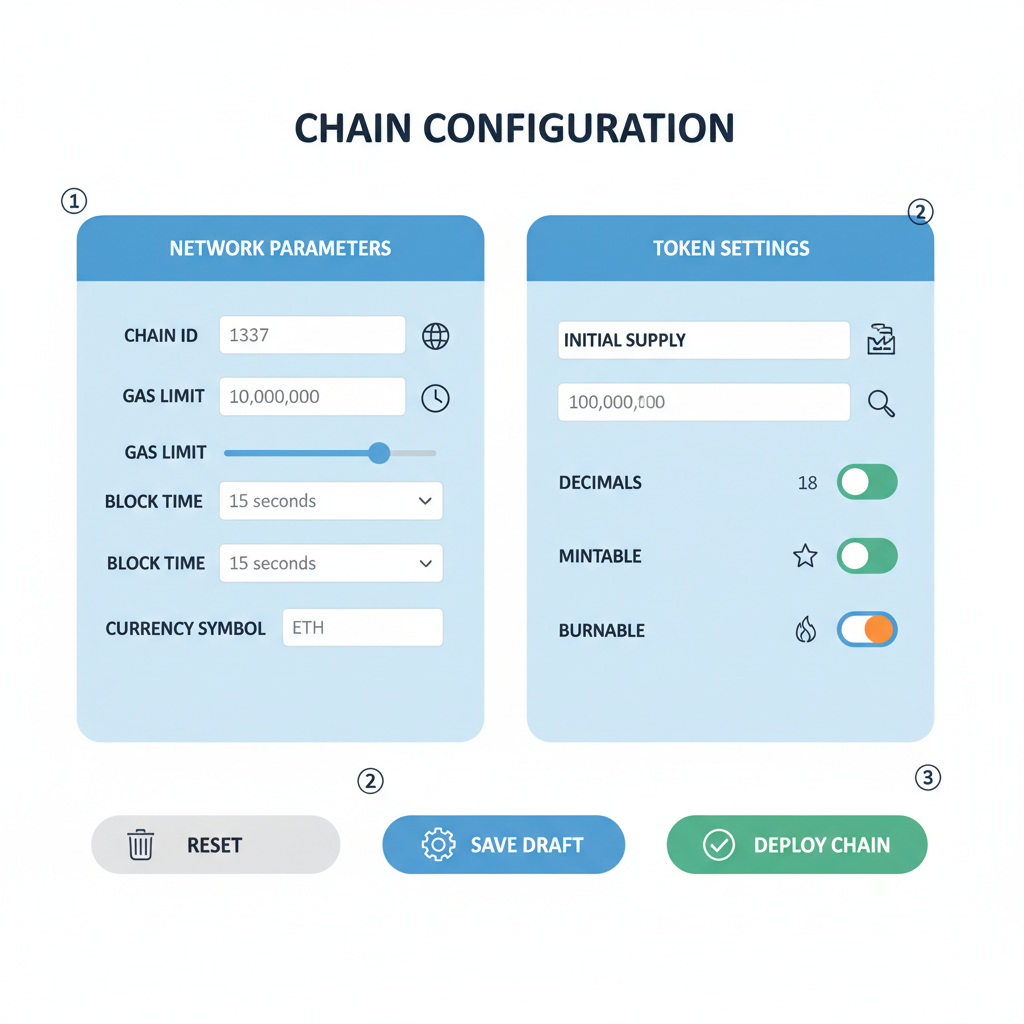
Customization extends to economics: bake in dynamic fees that scale with Ethereum's $1,942.22 volatility, or governance that vests tokens progressively. Spire's L3s shine here, syncing composability so your appchain drinks from L2 liquidity pools without bridges bottlenecking throughput.
Base Appchains exemplify seamless integration, bridging assets near-instantly to tap Base's ecosystem. For Ethereum loyalists, Conduit's OP Stack and Orbit hybrids mean custom L3 chain deployment feels native, yet sovereign. The kicker? Integrated DevRel kits bundle SEO-optimized docs, tweet templates, and launch checklists, turning technical wins into community magnets.
Comparison of L3 Appchain Boilerplates: Deployment Times, Costs, and Customization
| Provider | Deployment Time ⏱️ | Estimated Cost 💰 | Customization Level 🔧 |
|---|---|---|---|
| Zeeve | 1-7 days 🚀 | Subscription ($1,000+/mo) 💼 | High (Arbitrum Orbit, OP Stack, Polygon CDK) 🎛️ |
| Rollkit | 1-4 weeks 🛠️ | Free (open-source) 🆓 | Very High (custom DA, VM modules) 📐 |
| Arbitrum Orbit | 3-10 days ⚡ | Low (~0.2 ETH ≈ $388 + gas) ⛽ | High (flexible DA, Stylus Rust/C++) 🚀 |
DevRel Kits: Beyond Code to Ecosystem Domination
L3Boilerplate. com elevates this with full-spectrum resources. Our DevRel kit rollups pack marketing playbooks, pitch decks, and analytics dashboards, ensuring your appchain doesn't just run - it resonates. In a market where ETH lingers at $1,942.22 signaling consolidation, visibility trumps raw tech; these kits optimize for search with keywords like L3 appchain boilerplate, drawing builders scouting sovereign solutions.
Opinion: monolithic L1s and generic L2s fade as app-specific chains claim niches. Sovereign rollups, powered by these boilerplates, enable verifiable alpha - custom gas for AI inference, sovereign sequencing for privacy-first socials. Zeeve's multi-stack RaaS abstracts ops, but pair it with our templates for a launch that scales to millions without sequencer centralization risks.
ZK Stack's non-EVM flexibility suits wildcards like gaming rollups, where Rust outperforms Solidity. Polygon's CDK unifies liquidity via AggLayer, a pragmatic bet on interoperability without federation fragility. Developers report 70% faster iterations; costs plummet as boilerplates offload infra to hyperscalers.
This tooling renaissance coincides with Ethereum's resilience at $1,942.22, underscoring L3s as the scaling endgame. Base's appchains prove independent scaling works; extrapolate to L3s, and app-specific chains become the default for trillion-dollar TVL. Builders prioritizing sovereignty sidestep L2 congestion, crafting economies that evolve with users.
Armed with these app specific chain kits, teams bypass hype cycles, deploying resilient rollups that compound value. The edge goes to those blending technical sovereignty with DevRel savvy - launching not just chains, but movements.




No comments yet. Be the first to share your thoughts!