
Get l3 appchain boilerplates right
Before you run a deployment command, verify the environment variables and dependency versions. Boilerplates fail most often because of mismatched chain IDs or missing RPC endpoints, not because of complex code logic. Treat the setup like a checklist rather than a creative exercise.
Start by confirming your target L3 stack is installed. For example, Spire’s Pylon requires specific Rust toolchains and a Base RPC connection to function correctly. If you are using a generic template, ensure it supports the settlement layer you intend to use. A mismatch here breaks synchronous composability, which is the primary value of an L3 appchain.
Next, audit the .env file. Most kits expect variables like CHAIN_ID, RPC_URL, and DEPLOYER_PRIVATE_KEY. Hardcoding secrets in the repository is a common mistake that leads to immediate security risks. Use a local .env.local file and ensure it is listed in .gitignore.
Finally, check the node health. Run a simple test transaction against the local node or testnet before attempting a full deployment. This confirms that your infrastructure is reachable and that the smart contract bytecode is compatible with the EVM version specified in the boilerplate.
Deploy an L3 appchain in five minutes
Using a boilerplate removes the friction of writing consensus, sequencing, and execution layers from scratch. These kits provide a pre-configured development environment that connects your application to a settlement layer like Base or Ethereum. The goal is to spin up a functional L3 appchain so you can test synchronous composability without managing infrastructure from day one.
Start by cloning the official boilerplate repository to your local machine. These projects are designed to be self-contained, meaning the dependencies, node configurations, and deployment scripts are already bundled. Verify your environment meets the minimum requirements, typically a recent Node.js version and Docker installed locally.
Before running the node, you need to connect your appchain to its settlement layer. Open the configuration file and insert your RPC endpoints for the base layer (e.g., Base Mainnet or Sepolia). If you are using a DevRel kit, you may also need to set up an API key for a block explorer or indexer service to track state transitions.
Run the initialization script provided in the repository. This step compiles the smart contracts for your execution layer and sets up the local sequencer. The script will generate the necessary keys and network configurations. Check the terminal output for any missing dependencies; most boilerplates will prompt you to install them automatically.
Execute the start command to bring up the node. This process initializes the sequencer, the prover, and the client nodes. Within minutes, your L3 appchain should be producing blocks. Verify connectivity by checking the local block explorer or using a CLI tool to query the latest block number.
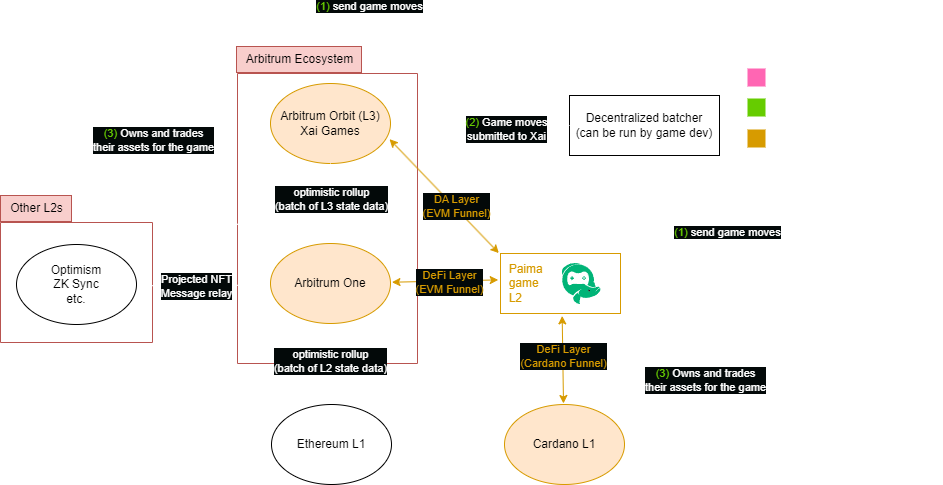
To confirm the chain is functional, deploy a simple ERC-20 or NFT contract from your local wallet. Once deployed, check that the transaction is included in a block and that the state is correctly posted to the settlement layer. This step proves that synchronous composability is working between your L3 and the underlying base layer.
Common Mistakes in L3 Appchain Deployment
Even with modern DevRel kits and boilerplates, deployment failures often stem from configuration oversights rather than code errors. These mistakes usually surface during the integration phase, when the appchain must prove its connection to the settlement layer.
Ignoring settlement layer limits to account for
Developers frequently treat the settlement layer as a passive backdrop. This is a critical error. The settlement layer (like Base) enforces specific data availability and fraud proof windows. If your appchain’s block time or sequencer latency doesn’t align with the settlement layer’s finality rules, transactions may appear stuck or revert unexpectedly. Always cross-reference your sequencer’s block production rate with the settlement layer’s gas limit and finality period.
Hardcoding Network IDs
Boilerplates often default to testnet configurations. Copy-pasting these settings into a mainnet or production environment without updating network IDs, RPC endpoints, and bridge contracts is a common pitfall. This leads to silent failures where the appchain thinks it is broadcasting to the correct chain, but is actually talking to a disconnected or legacy network. Use environment variables for all network-specific constants to prevent accidental misconfiguration.
Neglecting Gas Estimation
L3 transactions have different gas dynamics than L1. Many developers apply L1 gas estimation strategies, leading to overpaying or underpaying for execution. Underestimation causes transaction drops; overestimation wastes user funds. Use the L3-specific gas oracle provided by your DevRel kit. Verify the gas limit against actual on-chain consumption during load testing to ensure your users experience consistent transaction costs.
Skipping Composability Checks
Synchronous composability is the primary value proposition of L3 appchains. If your appchain cannot seamlessly read or write to the settlement layer in a single transaction, you have lost the benefit of the architecture. Test your smart contracts’ ability to call settlement layer contracts directly. If you find yourself needing complex off-chain bridges or separate transaction steps for simple data transfers, revisit your contract integration strategy.
L3 appchain boilerplate: what to check next
Before committing to a stack, it helps to separate marketing speed from engineering reality. Boilerplates and DevRel kits dramatically reduce initial setup friction, but they do not replace the need for custom logic, security audits, or long-term maintenance.
The following answers address the most common technical objections and operational concerns when deploying an L3 appchain in 2026.
No comments yet. Be the first to share your thoughts!