
Get L3 Appchain Boilerplates Right
Before you clone a template or spin up a node, you need to understand the architecture you are building upon. Layer 3 (L3) appchains are not standalone blockchains; they are specialized execution layers that settle on Layer 2 (L2) rollups, which in turn settle on Layer 1 (L1) base chains. This hierarchy dictates your security model, cost structure, and development choices.
Understanding this stack is critical for DevRel and engineering teams. An L1 like Ethereum provides security and finality. An L2 like Arbitrum or Optimism handles transaction throughput and fees. Your L3 appchain then handles the specific logic of your decentralized application, allowing for high customization and low latency.
Choosing the right boilerplate depends on which L2 you are targeting and what level of sovereignty you require. Some frameworks offer pre-configured bridges and sequencers, while others require you to manage the full stack. Misalignment here can lead to costly rewrites or security vulnerabilities.
The Three Layers Explained
To make informed decisions, keep the layer distinction clear in your planning:
- Layer 1 (Base): The foundation. Examples include Ethereum, Solana, or Bitcoin. This layer handles consensus and security. It is slow and expensive but maximally secure.
- Layer 2 (Scaling): The bridge. Examples include Arbitrum, Optimism, or zkSync. These layers use rollup technology to batch transactions, reducing fees and increasing speed while inheriting L1 security.
- Layer 3 (Application): The app. This is your custom blockchain built on top of an L2. It allows you to tailor consensus, virtual machines, and state management specifically for your dApp’s needs.
Prerequisites for Success
Before diving into code, ensure you have the following in place:
- L2 Selection: Decide which L2 network your L3 will settle on. This choice affects gas costs, developer tooling, and user base.
- Boilerplate Compatibility: Ensure the boilerplate you choose supports your selected L2. Some frameworks are L2-agnostic, while others are tied to specific ecosystems like StarkNet or Polygon CDK.
- Security Audit Plan: Even with a boilerplate, custom logic introduces risk. Plan for audits early, especially if you are handling user funds or sensitive data.
By clarifying these prerequisites, you avoid common pitfalls and set your team up for a smoother development cycle.
Work through the steps
Launching an L3 appchain boilerplate requires moving from abstract architecture to concrete deployment. This sequence guides you through the essential phases of building modular infrastructure that settles securely on Layer 2 while offering distinct application logic. Each step builds on the previous one, ensuring your chain is both customizable and interoperable.
Before writing code, identify the specific problem your L3 solves. Unlike L1 or L2, L3 focuses on the application layer, allowing for highly specialized logic. Determine which L2 your chain will settle on, as this dictates your security model and data availability costs. Clear scoping prevents feature creep and ensures the boilerplate remains lean.
Select your virtual machine or execution layer. Popular choices include EVM-compatible environments for broad developer adoption or WASM for custom language support. Configure the genesis block to set initial parameters, such as gas limits and initial state. This environment handles transaction execution before any data is committed to the underlying L2.
Your L3 needs a reliable way to broadcast transactions. Decide whether you will use the L2’s data availability layer or a dedicated DA solution like Celestia or EigenDA. Configure the sequencer to order transactions efficiently, ensuring low latency for end-users. This step is critical for maintaining the user experience that distinguishes appchains from general-purpose L2s.
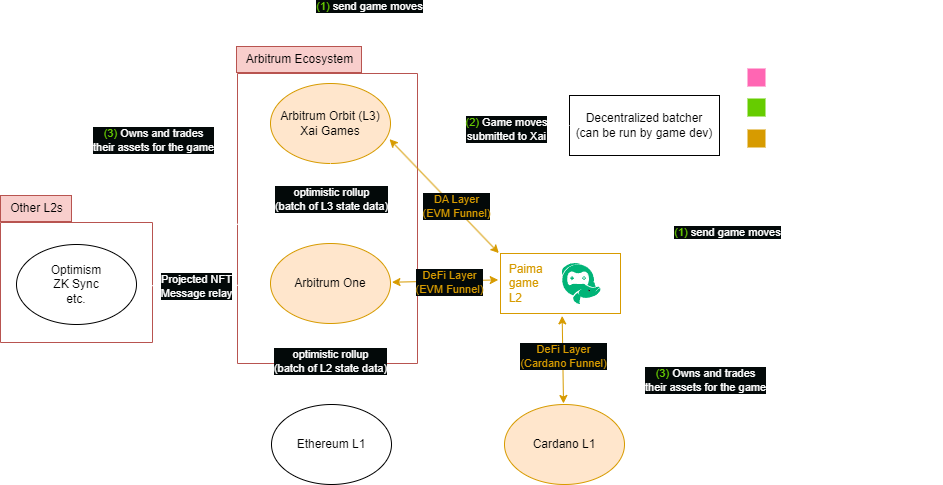
Build the two-way bridge that connects your L3 to the L2. These contracts must handle deposit and withdrawal logic, ensuring that assets moved between layers are accounted for correctly. Test the settlement mechanism thoroughly, as this is the primary trust boundary. A secure bridge is the backbone of any L3 infrastructure.
Once the boilerplate is configured, deploy it to a testnet to validate performance. Monitor gas usage, block times, and bridge liquidity. Use the collected data to optimize parameters before mainnet launch. Continuous monitoring ensures your appchain remains stable as user activity scales.
After completing these steps, your L3 appchain boilerplate is ready for initial testing. Use the following checklist to verify readiness before public deployment.
Common mistakes in L3 appchain boilerplates
Ready-to-deploy modular infrastructure saves time, but it also hides pitfalls that can derail a project before it launches. Builders often assume a boilerplate is a finished product rather than a starting point. This section outlines the specific errors that cause poor outcomes when using L3 appchain templates.
Ignoring settlement layer compatibility
The most frequent error is deploying an L3 without verifying its compatibility with the underlying L2. L3s settle on L2s, meaning the security and finality of your appchain depend entirely on that relationship. If the boilerplate assumes a specific L2 (like Optimism or Arbitrum) but your project requires a different ecosystem, the gas token, bridge mechanics, and data availability layers will not align. This mismatch forces costly rewrites later. Always check the settlement contract addresses and data commitment formats in the boilerplate documentation before initializing your chain.
Overlooking the devrel configuration
Boilerplates are designed for speed, but they often skip the nuanced configuration required for effective developer relations. A common mistake is leaving default repository structures, documentation links, and community channels in place. If your boilerplate points to a generic GitHub organization or uses outdated README templates, new developers will struggle to understand your specific architecture. DevRel is not just about marketing; it is about clear technical onboarding. Ensure the boilerplate includes custom hooks for your specific SDK, clear error messages for common deployment failures, and a dedicated section for your unique consensus rules.
Assuming zero maintenance
Many teams treat a boilerplate as "set it and forget it." This is dangerous. Modular infrastructure evolves rapidly. A boilerplate that worked six months ago may now rely on deprecated versions of Foundry, Hardhat, or specific ZK-proof libraries. If you do not actively monitor the upstream dependencies, your L3 appchain will drift into technical debt. Regularly audit the boilerplate against the latest stable releases of your chosen stack. Patching security vulnerabilities in the base layer is far cheaper than fixing a broken consensus mechanism in production.
L3 appchain boilerplate: what to check next
Before committing to a modular stack, it helps to clarify how Layer 3s fit into the broader ecosystem and what boilerplates actually deliver. These answers address the most common practical objections developers raise when evaluating ready-to-deploy infra.
No comments yet. Be the first to share your thoughts!