
Why L3 appchain boilerplates matter
The blockchain scaling narrative has shifted from generic throughput to specialized execution. Layer 2 rollups solved the bandwidth problem, but they often forced diverse applications into a single, rigid execution environment. L3 appchains resolve this by providing dedicated execution layers that settle on an L2, allowing builders to customize consensus, gas tokens, and virtual machines for specific use cases.
Building an L3 from scratch requires navigating complex ZK circuit development, sequencer infrastructure, and bridge security. This is where L3 appchain boilerplates become critical infrastructure. They provide the pre-audited codebases, node configurations, and deployment scripts needed to spin up a specialized chain in days rather than months. Without these templates, the barrier to entry for custom L3s remains prohibitively high for most teams.
The value of a boilerplate lies in its ability to abstract the underlying complexity of zero-knowledge proofs while preserving the flexibility of an appchain. StarkWare notes that L3 appchains enable greater customizability for builders seeking to fully control the logic of their dApp. By leveraging a boilerplate, teams can focus on product-market fit and user acquisition rather than reinventing the wheel for foundational chain architecture.
This shift enables a new class of applications that require low-latency finality, specific privacy guarantees, or custom tokenomics—features that are difficult to implement efficiently on shared L2 environments. As the ecosystem matures, the standardization provided by these boilerplates will accelerate the adoption of purpose-built chains, making L3s a viable option for serious infrastructure projects.
Modular L3 development stack
A modern L3 appchain boilerplate decouples execution, settlement, and data availability into distinct layers. This modular approach allows builders to optimize each component independently while maintaining security guarantees inherited from the underlying L2.
Execution layer
The execution layer handles transaction processing and state transitions. In a boilerplate setup, this is typically built on a high-performance EVM-compatible runtime like OP Stack or a custom zkEVM implementation. The boilerplate provides the necessary tooling to spin up validator nodes and manage block production, ensuring the L3 can process transactions at high throughput.
Settlement and data availability
Settlement determines how the L3 proves its state to the L2. Modern boilerplates support both optimistic and zero-knowledge proof systems. For data availability, the L3 posts compressed state roots or raw transaction data to the L2. This ensures that the L3's history remains verifiable and accessible, preventing data loss and enabling trustless bridge withdrawals.
Real-time synchronization
Advanced boilerplates enable synchronous data reading from the L2 settlement layer. This means the L3 can access L2 state in real-time, allowing for complex cross-layer interactions without relying on asynchronous bridges. This architecture reduces latency and simplifies the developer experience when building apps that require deep integration with the base layer.
Top L3 appchain boilerplates in 2026
The L3 appchain boilerplate market has matured from experimental prototypes into production-ready infrastructure. For 2026, the distinction between solutions lies less in basic rollup mechanics and more in how they handle settlement, data availability, and developer velocity. Choosing the right boilerplate is an infrastructure decision that impacts long-term maintainability and security posture.
The following comparison highlights three leading approaches. Each targets a different layer of the stack, from full-stack sovereign rollups to specialized settlement integrations and hardware-secure application environments.
| Boilerplate | Settlement Layer | Data Availability | Primary Focus |
|---|---|---|---|
| L3 Boilerplate | Ethereum L2 | EigenDA / Celestia | Sovereign rollups with ready templates |
| Spire Pylon | L2 (Based L3) | L2 Calldata / Blob | Sync-based L3 appchain development |
| Ledger App Boilerplate | N/A (App-level) | N/A | Hardware-secure dApp integration |
L3 Boilerplate remains a strong entry point for teams building sovereign rollups. It provides a comprehensive template stack designed to deploy custom chains with minimal friction. The solution abstracts much of the complex node configuration, allowing developers to focus on application logic rather than consensus mechanics. Its integration with decentralized data availability networks like EigenDA ensures that L3 appchain boilerplate deployments remain cost-effective while maintaining security guarantees derived from Ethereum.
Spire Pylon offers a different architectural approach, specifically targeting "based L3" designs. As documented in their technical guides, Pylon demonstrates how an L3 appchain can synchronously read data from its L2 settlement layer in real-time. This synchronous model is critical for applications requiring immediate finality and tight coupling between the L3 execution layer and L2 security. It is particularly suited for projects where data availability and settlement speed are paramount, reducing the complexity of cross-layer communication.
Ledger App Boilerplate serves a distinct niche within the broader L3 ecosystem. While not an L3 rollup framework in the traditional sense, it provides the essential reference for maintaining and developing applications that interact with hardware wallets. For L3 appchain boilerplate projects targeting mainstream adoption, secure user onboarding is non-negotiable. This repository ensures compliance with Ledger guidelines, bridging the gap between complex L3 infrastructure and secure, user-friendly application interfaces.
When evaluating these options, consider your team's expertise in Rust versus Go, your data availability preferences, and whether you prioritize synchronous settlement (Spire) or rapid sovereign deployment (L3 Boilerplate). The Ledger boilerplate should be integrated as a complementary layer for any solution aiming for broad consumer adoption.
Integrating DevRel Kits for Growth
DevRel kits transform L3 appchain boilerplates from static code into active growth engines. By bundling comprehensive documentation, pre-built SDKs, and community templates, these kits reduce the friction that typically stalls early developer adoption. When builders can deploy and iterate without reinventing foundational infrastructure, the network effect accelerates significantly.
A well-structured DevRel kit functions as a force multiplier for engineering teams. It shifts the focus from low-level chain configuration to application-specific logic. This reduction in setup time allows teams to validate market fit faster, turning technical deployment into a strategic advantage rather than a logistical hurdle.
To measure the market context surrounding these infrastructure plays, consider the broader performance trends of Layer 3 solutions and their underlying assets.
Choosing the Right Infrastructure
Selecting an L3 appchain boilerplate requires aligning technical constraints with operational goals. The decision hinges on three variables: consensus security model, data availability layer, and DevRel tooling depth. Teams must evaluate which boilerplate minimizes friction for their specific deployment pipeline while maintaining compliance with the underlying L2's security guarantees.

Determine if your application requires independent sequencer control or shared L2 security. Boilerplates like those built on Starknet or Base offer different trade-offs between censorship resistance and cost. Verify that the chosen framework supports your required rollup type (ZK or Optimistic) and data availability strategy (EIP-4844 blobs vs. DA layers).
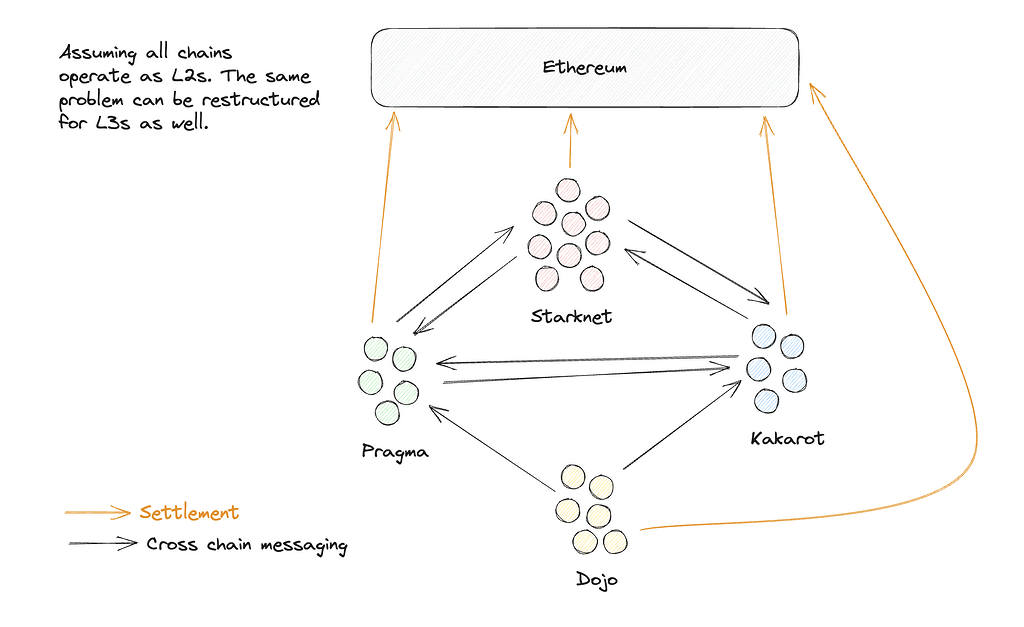
Infrastructure is only as good as its observability. Prioritize boilerplates that include pre-integrated dashboards for transaction latency, gas usage, and validator health. For DevRel success, the kit must provide clear API endpoints and documentation scaffolding that allows your team to onboard external developers without rebuilding core infrastructure.
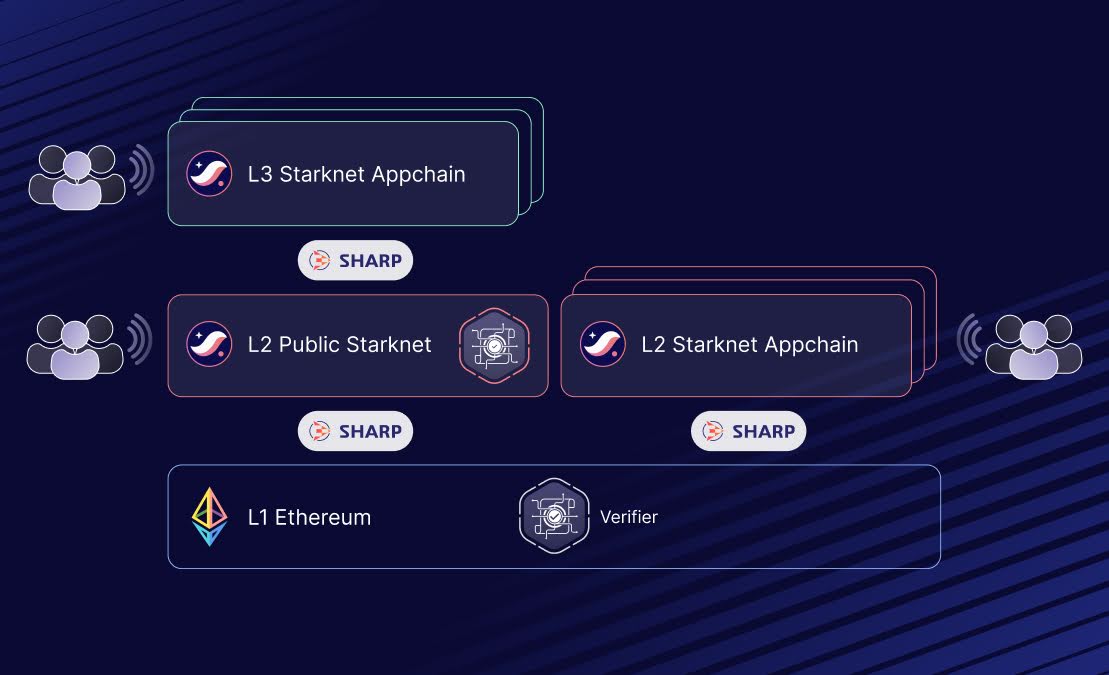
Test the boilerplate's CI/CD capabilities and upgrade mechanisms. Can you deploy a testnet instance in under an hour? Does the framework support modular upgrades to the sequencer or DA layer without halting the chain? Rigorous testing of these paths prevents costly downtime during mainnet launch.
| Feature | Standard L2 Fork | Modular L3 Kit |
|---|---|---|
| Sequencer Control | Shared/None | Full Control |
| Data Availability | L2 Mainnet | Optional DA Layer |
| DevRel Scaffolding | Basic Docs | Integrated Dashboards |
The right boilerplate reduces time-to-market by abstracting complex cryptographic proofs and network topology. By focusing on these technical pillars, teams can select an L3 appchain boilerplate that scales with their user base without compromising on security or developer experience.
No comments yet. Be the first to share your thoughts!