
Why use L3 appchain boilerplates
L3 appchains allow builders to fully control dApp logic while settling on L2s, offering greater customizability than standard L2 deployments. Instead of building a sovereign rollup from scratch, these boilerplates provide a pre-configured foundation that handles the complex infrastructure underneath.
This approach saves weeks of development time. You skip the heavy lifting of configuring sequencers, data availability layers, and bridge contracts. The boilerplate handles the boring, error-prone plumbing so you can focus on the unique mechanics of your application.
Customization remains central to the process. While the base template is shared, you retain full ownership of the execution environment. This means you can optimize for specific transaction types, implement custom state transition functions, or integrate specialized consensus mechanisms without fighting against a generic L2 framework.
The result is a dedicated chain that behaves exactly like your product requires. You get the security guarantees of Ethereum settlement without the performance bottlenecks of shared execution. It is the fastest path to a sovereign, scalable dApp.
Spin up a sovereign rollup locally
You can stand up a fully functional L3 appchain boilerplate for sovereign rollups right on your localhost in under five minutes. This quick setup lets you verify the core architecture before committing to any cloud infrastructure or mainnet deployment. By running the node locally, you get immediate feedback on block production, sequencer behavior, and state transitions without incurring gas costs.
The process is straightforward: clone the repository, install the necessary dependencies, and launch the local environment. The boilerplate handles the heavy lifting of configuring the rollup, so you can focus on testing your specific application logic.
Start by cloning the official L3 appchain boilerplate repository to your local machine. This repo contains the pre-configured Docker files, smart contracts, and sequencer settings required to spin up a sovereign rollup. Ensure you have Git installed and navigate to your preferred development directory before running the clone command.
Once the repository is cloned, install the project dependencies using your preferred package manager. This step pulls in the necessary SDKs, testing frameworks, and local node binaries. You will also need to set up your environment variables, typically by copying the provided .env.example file to .env and filling in any required local configuration keys.
Run the local node command to start the sovereign rollup. This command initializes the sequencer, the local execution layer, and the state sync mechanism. Within seconds, you should see logs indicating that the node is syncing and producing blocks. Verify that the local RPC endpoint is responding to queries to confirm the rollup is fully operational.
Configure the L2 settlement layer
Selecting the right L2 provider for your L3 appchain is the foundation of your security model. You need a settlement layer that offers synchronous data availability, ensuring your L3 can read state proofs in real-time without waiting for batch confirmations. This choice dictates your finality speed and transaction costs.
1. Select your L2 provider
Start by choosing the L2 chain that will settle your L3 blocks. Popular options like Base or Starknet offer different trade-offs in terms of ecosystem maturity and data availability mechanisms. Your selection should align with your appchain’s specific throughput needs and existing developer tooling preferences.
2. Bridge your assets
Once you have picked an L2, you must bridge ETH or native tokens to that layer. This capital serves as the gas fund for your L3’s sequencer and validators. Use the official bridge interface or a trusted third-party aggregator to move funds securely before deploying your contracts.
3. Deploy the settlement contracts
Deploy the necessary settlement contracts to your chosen L2. These contracts handle the submission of state roots and fraud proofs. Ensure you configure the correct RPC endpoints and chain IDs so your L3 sequencer can communicate seamlessly with the settlement layer.
// Example: Configuring the L2 settlement endpoint
const L2_RPC_URL = "https://your-chosen-l2-rpc-provider.io";
const SETTLEMENT_CONTRACT_ADDRESS = "0x...";

// Initialize the settlement client
const settlementClient = createClient({
  rpcUrl: L2_RPC_URL,
  contractAddress: SETTLEMENT_CONTRACT_ADDRESS,
  chain: l2ChainId,
});
4. Verify data synchronization
Test the connection by submitting a dummy state root and verifying that your L3 can read the corresponding proof. This step confirms that your L3 is synchronously reading data from the L2, which is critical for maintaining security guarantees and preventing state divergence.
Bridge the settlement layer
Connecting your L3 appchain to the L2 settlement layer is the final step in establishing a secure, sovereign environment. This process involves configuring the bridge contracts to allow seamless asset and token movement between the base layer and your new chain. Without this connection, your appchain remains isolated and unable to settle finality or transfer value.
Open your appchain configuration file and locate the bridge settings. You will need to specify the L2 contract addresses for the token bridge and the sequencer. Ensure the bridge_contract field points to the deployed L2 bridge instance to establish the initial trust path.
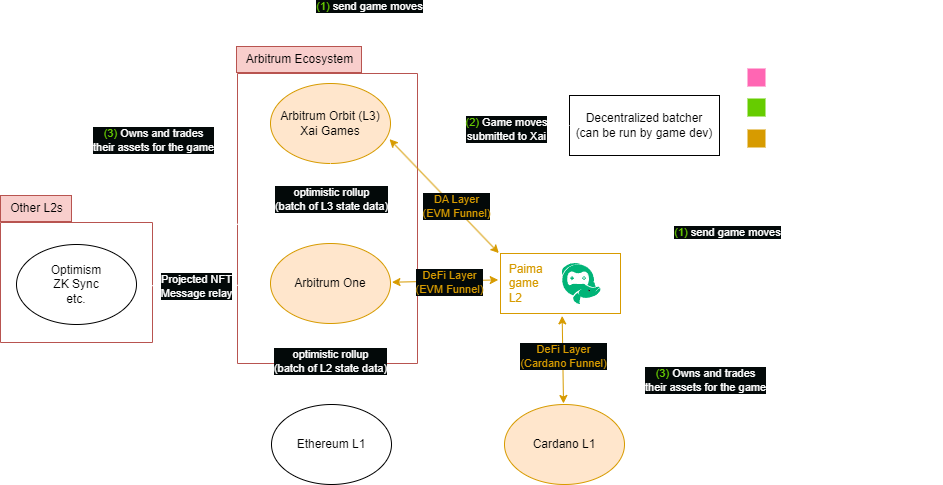
Use the boilerplate deployment script to instantiate the bridge contracts on your L3 chain. This step creates the local state roots that the L2 will verify. The script typically handles the necessary ABI bindings and contract initialization, ensuring your L3 can receive and validate proofs from the L2.
Before testing, you must provide liquidity to the bridge. Transfer a small amount of testnet ETH or the native token from your L2 faucet to the bridge contract address on L3. This funding allows the bridge to process initial withdrawals and proves that the cross-chain messaging channel is active.

Initiate a test transaction by sending tokens from L2 to L3. Monitor the block explorer for the bridge event logs. Once the L2 proof is submitted and verified on L3, the tokens should appear in your L3 wallet. This confirms that your settlement layer is correctly bridging assets.
Integrate DevRel kits for adoption
Technical infrastructure is only half the equation. To turn a deployed appchain into a living ecosystem, you need to equip early adopters with the tools they need to build and share. DevRel kits bridge the gap between complex blockchain mechanics and user-friendly onboarding.
Most modern appchain boilerplates, such as those available through L3 Boilerplates, include pre-built DevRel assets. These kits typically contain standardized documentation templates, social media graphics, and developer onboarding flows. By integrating these directly into your launch workflow, you reduce the friction for external contributors.
Start by auditing the included documentation. Ensure the quickstart guides are accurate for your specific chain configuration. Next, configure the developer portal or Discord server to mirror the kit's structure. This consistency helps new users find answers without contacting support.
A clean onboarding experience acts as a force multiplier. When developers can spin up a test environment or read clear integration steps in under five minutes, they are more likely to contribute to your ecosystem. Focus on making the first interaction as smooth as possible.
-
Verify documentation links are live and correct
-
Customize social media templates with your brand assets
-
Set up a dedicated developer support channel
-
Test the onboarding flow with a fresh user account
Common l3 deployment: what to check next
Boilerplates accelerate setup, but they don’t solve every architectural problem. Before spinning up an L3 appchain boilerplate, verify how your sequencer handles downtime and how your rollup settles proofs on the L2. The following questions address the most common technical concerns for builders using these templates.
No comments yet. Be the first to share your thoughts!